

The History of the Observatory
The Round Tower is Europe’s oldest functioning observatory building. Christian IV built the tower so that astronomers from the University of Copenhagen could observe the stars high above the city’s lights. For centuries, it was a centre of Danish astronomy and the starting point for both meteorological measurements and land surveying.
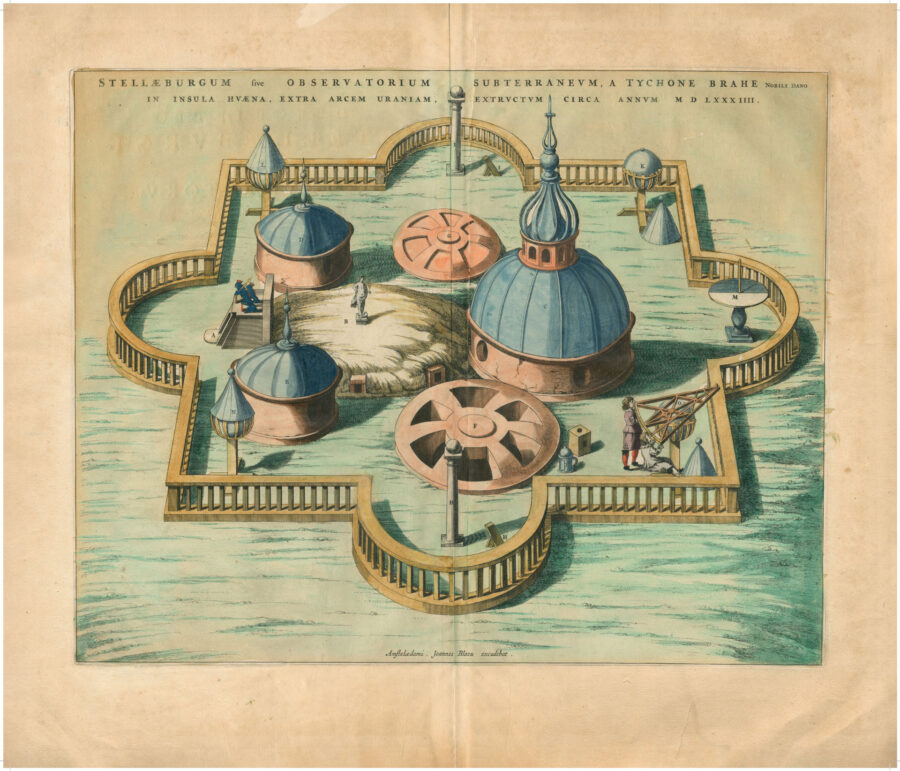
The Round Tower’s first name was “Københavns Kongelige Stjerneborg” (“Copenhagen’s Royal Stjerneborg”). King Christian IV had the tower built between 1637 and 1642, inspired by Tycho Brahe’s observatory Stjerneborg on Hven — the birthplace of modern astronomy. The King was advised to place the Observatory outside the city, but he wanted it to form part of a central complex of learning in the heart of the Latin Quarter.
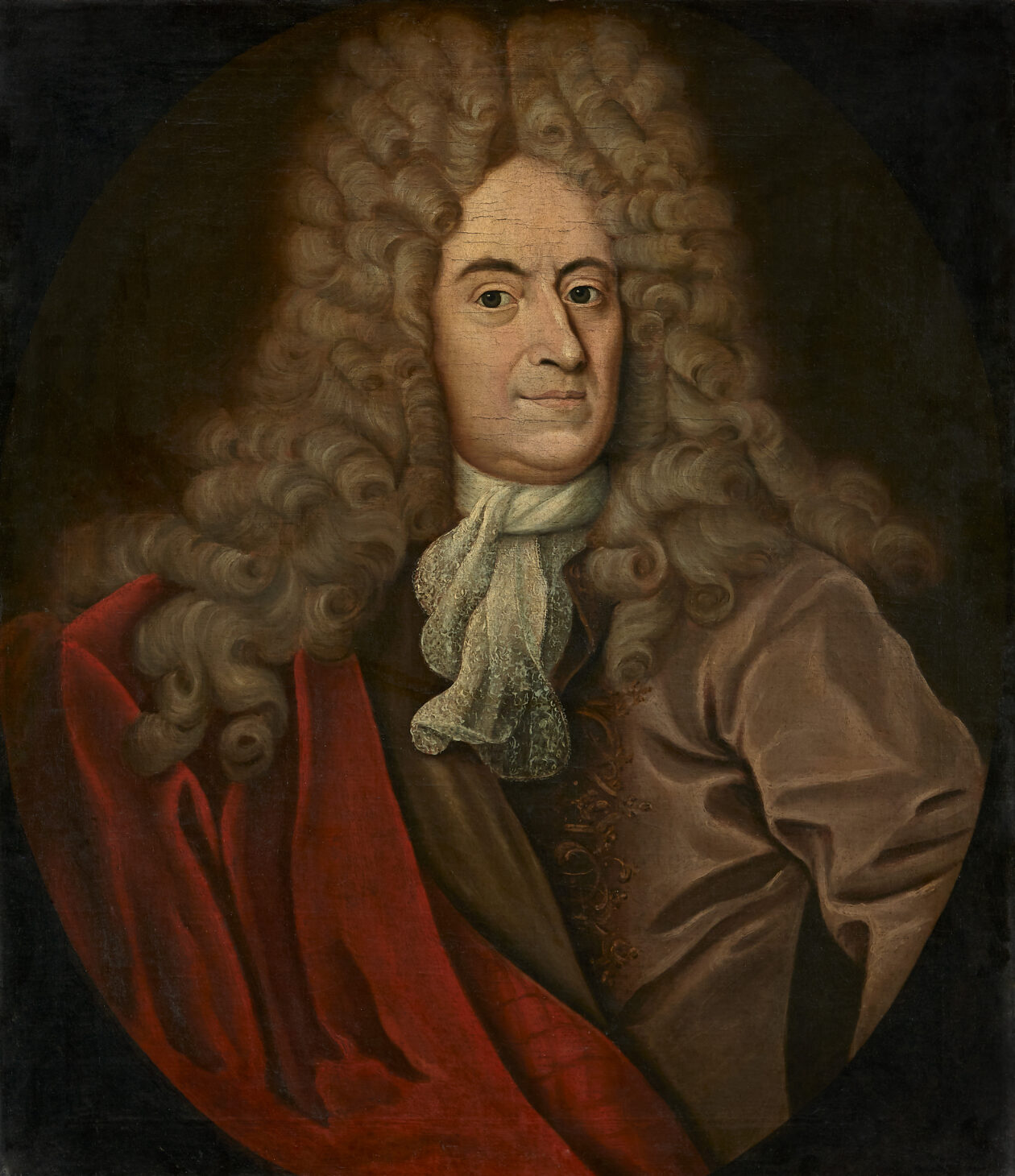
In 1685, Ole Rømer became head of the observatory at the Round Tower. Before that, in Paris, he had made one of the most significant discoveries in the history of science: that light travels at a finite speed.
The Round Tower has not always had the iconic observatory dome we know today. Since its construction, the Observatory has undergone several changes in design and is no longer reserved for the university. Today, it is open to everyone. Dating from 1929, the Public Observatory has both a dome and a telescope that can be rotated 360 degrees, and it is open to all visitors to the tower from near and far.
From October to March, the Observatory is staffed twice a week, allowing you to experience the universe through the large refracting telescope and feel a connection to both the sky and the history of astronomy that still lives on at the top of the Round Tower.
1637
The Foundation Stone
Construction of the Round Tower began with bricks in the royal colours of red and yellow. The tower’s original name – Regium Stellæburgum Hafniense (Copenhagen Royal Star Castle) – shows that the observatory was intended as a successor to astronomer Tycho Brahe’s underground observatory Stjerneborg (Star Castle) on the island of Ven. The plan was for the first observatory to have five recessed chambers like Stjerneborg — although we do not know how much of this was realised.
1642
The Round Tower Completed
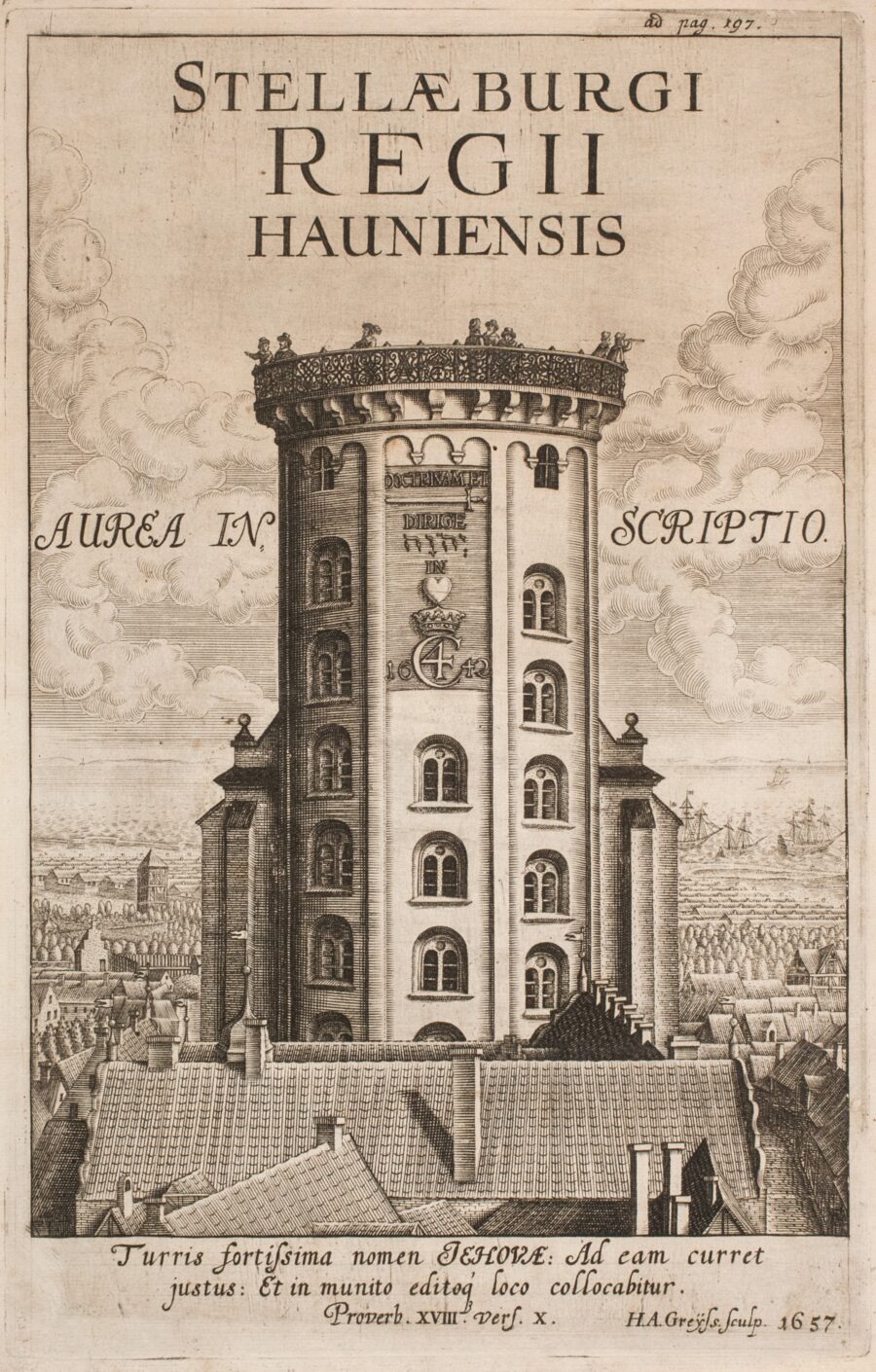
The Round Tower was completed as the first part of the Trinitatis complex – the building complex includes three university functions, namely the University of Copenhagen Observatory at the top of the tower, the student church Trinitatis Church and the University Library on the floor above the church. In the early years, astronomers (including Tycho Brahe) used various sighting instruments, as telescopes had only just been invented at that time.
Around 1690
Ole Rømer’s Observatory
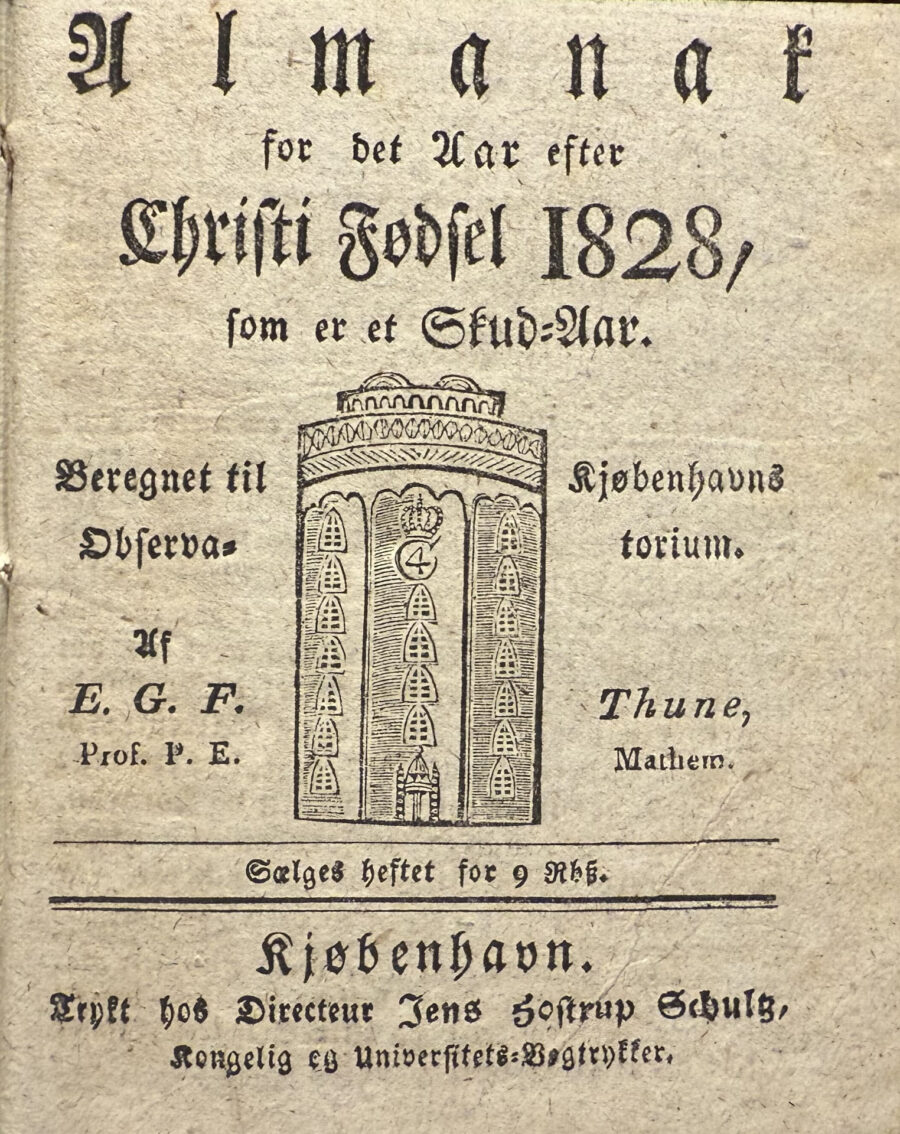
After discovering the ‘hesitation of light’ in Paris, astronomer Ole Rømer returned to Denmark where he became head of the Observatory at the top of the Round Tower. He built a new observatory with a wide circular tower and two domes, under which stood two telescope arrays of his own invention. Rømer’s two domes appeared on the cover of the University of Copenhagen almanac for many years to come, even in 1828, a hundred years after the Observatory was destroyed in the Great Fire of Copenhagen.
1728
The Observatory on Fire
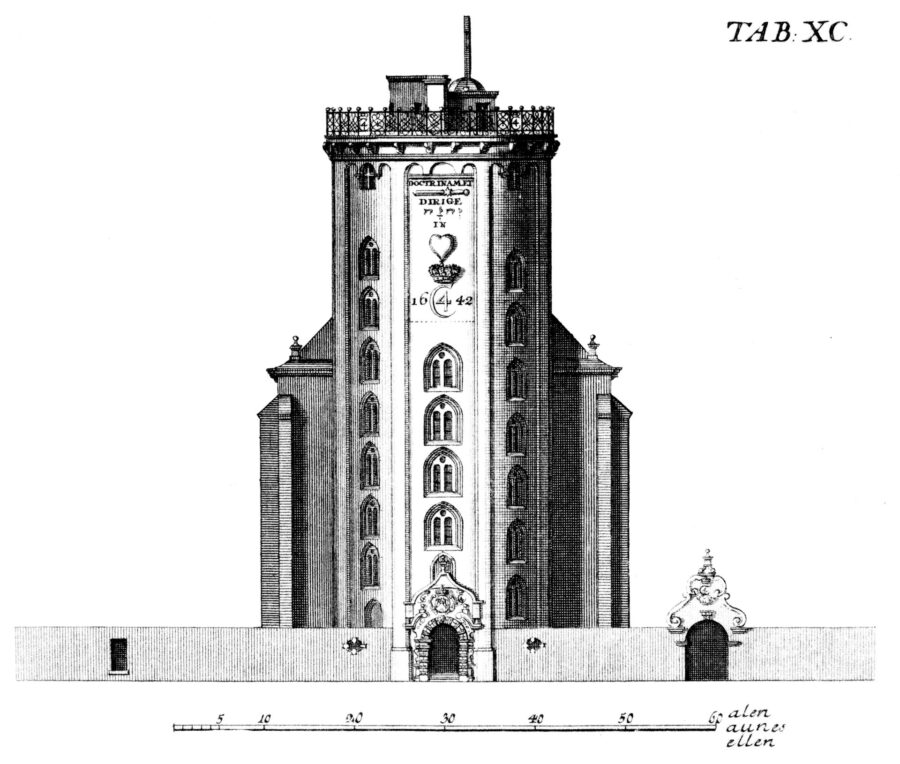
Ole Rømer’s Observatory was destroyed during the Great Fire of Copenhagen in 1728. His successor and pupil Peder Niels Horrebow built a new one, which was not completed until 1741. The new Observatory consisted of a round and a square part, as seen in architect Laurids de Thurah’s drawing from 1748. The Observatory was run by the Horrebow family for most of the 18th century. Peder Nielsen Horrebow’s son, Peder Horrebow the Younger, became more interested in meteorology, which he practised in the Observatory from 1751.
1780
An Octagonal Observatory
In 1777, astronomer Thomas Bugge became the new head of the Observatory and, based on study trips to several European countries, he initiated the construction of a new observatory. A marble plaque that now hangs in the Spiral Ramp commemorates the inauguration in 1780. Thomas Bugge’s observatory was octagonal with two side wings. Alongside astronomy, Bugge was also involved in surveying.
1861
The Observatory Moved

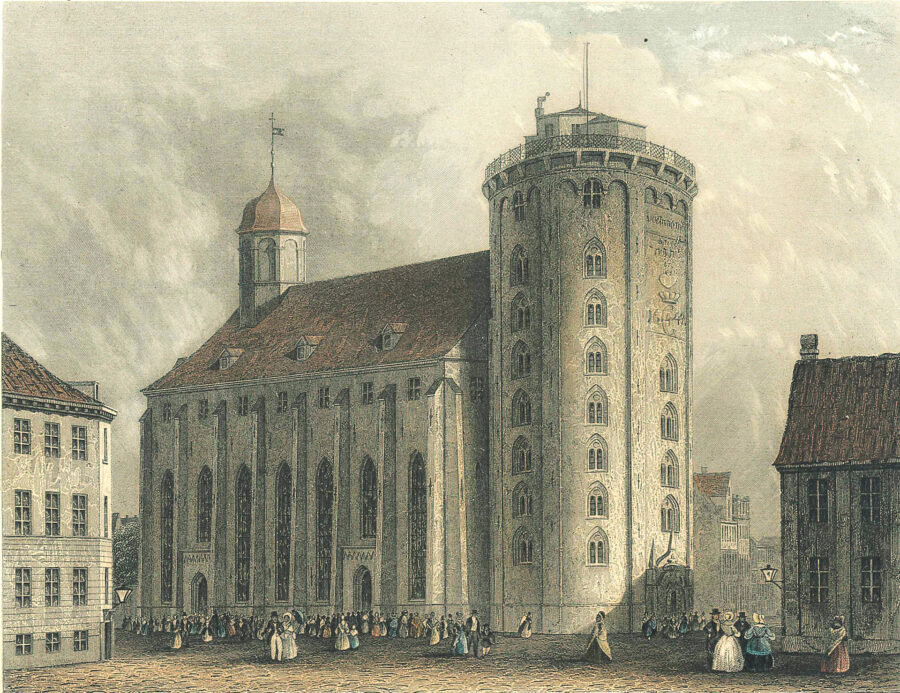
Due to space constraints, the University of Copenhagen Observatory moved to Østervold by the Botanical Gardens, where it remained for almost a hundred years. Thomas Bugge’s octagonal Observatory was then demolished and replaced by a small tower above the granite staircase placed inside the hollow core of the Round Tower. The small tower is popularly known as the “pepper shaker”.
1929
The Public Observatory Opened
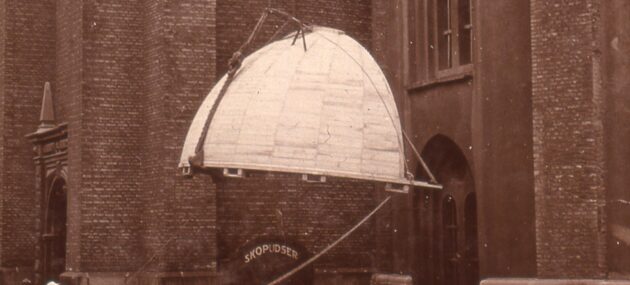
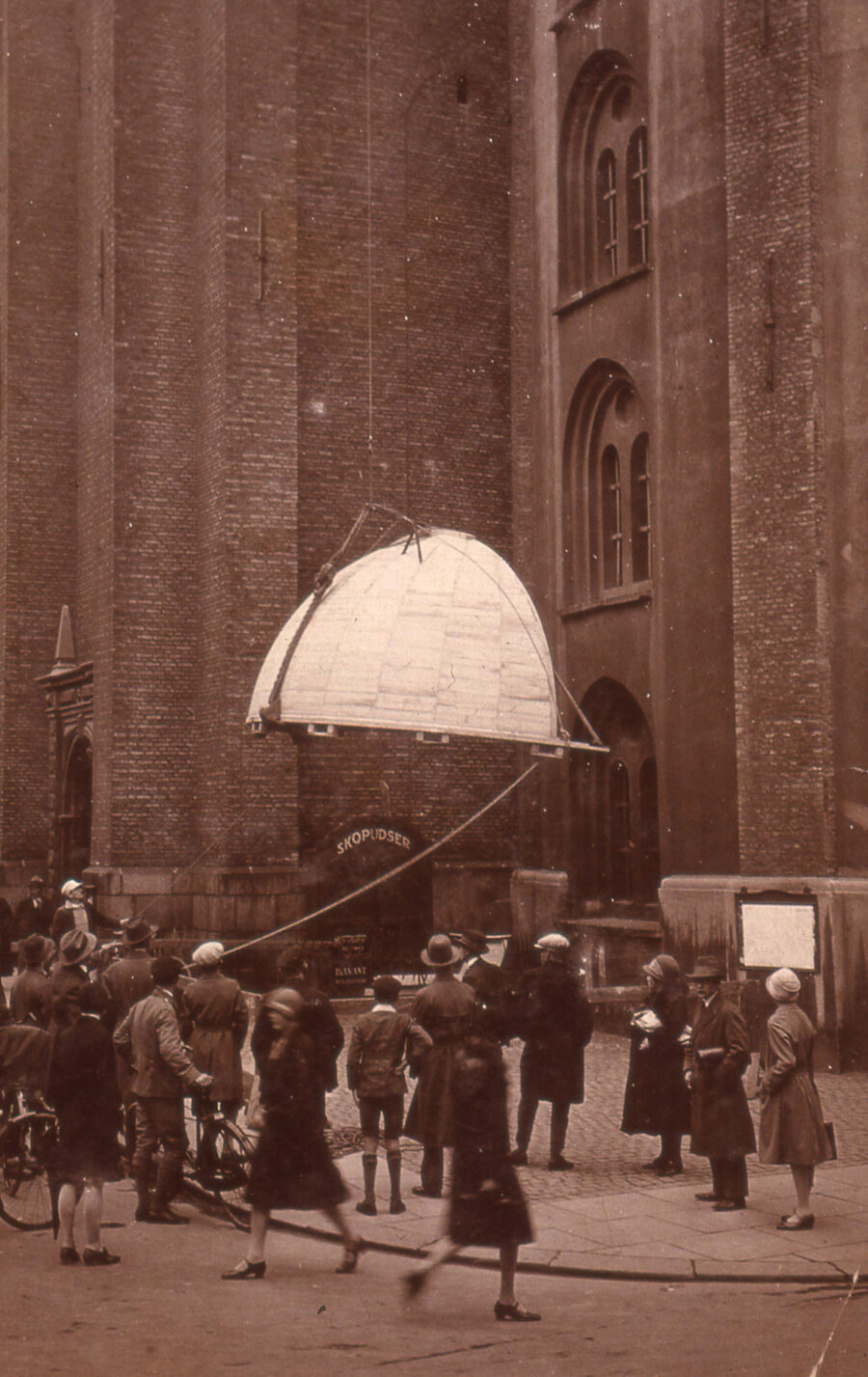
After some years of experimenting on the platform, the current public Observatory with its new telescope was built. The Observatory was built with a rotating dome painted red on the inside and covered with green roofing felt on the outside to imitate copper. The dome, designed as two hemispheres, was transported by horse-drawn carriage through the city and hoisted into place early in the morning of 21 May. Carl Luplau Janssen, the first director of the public Observatory, enthusiastically proclaimed, “The tower is the oldest working observatory building in the world”.
1968
The Dome was Clad in Copper
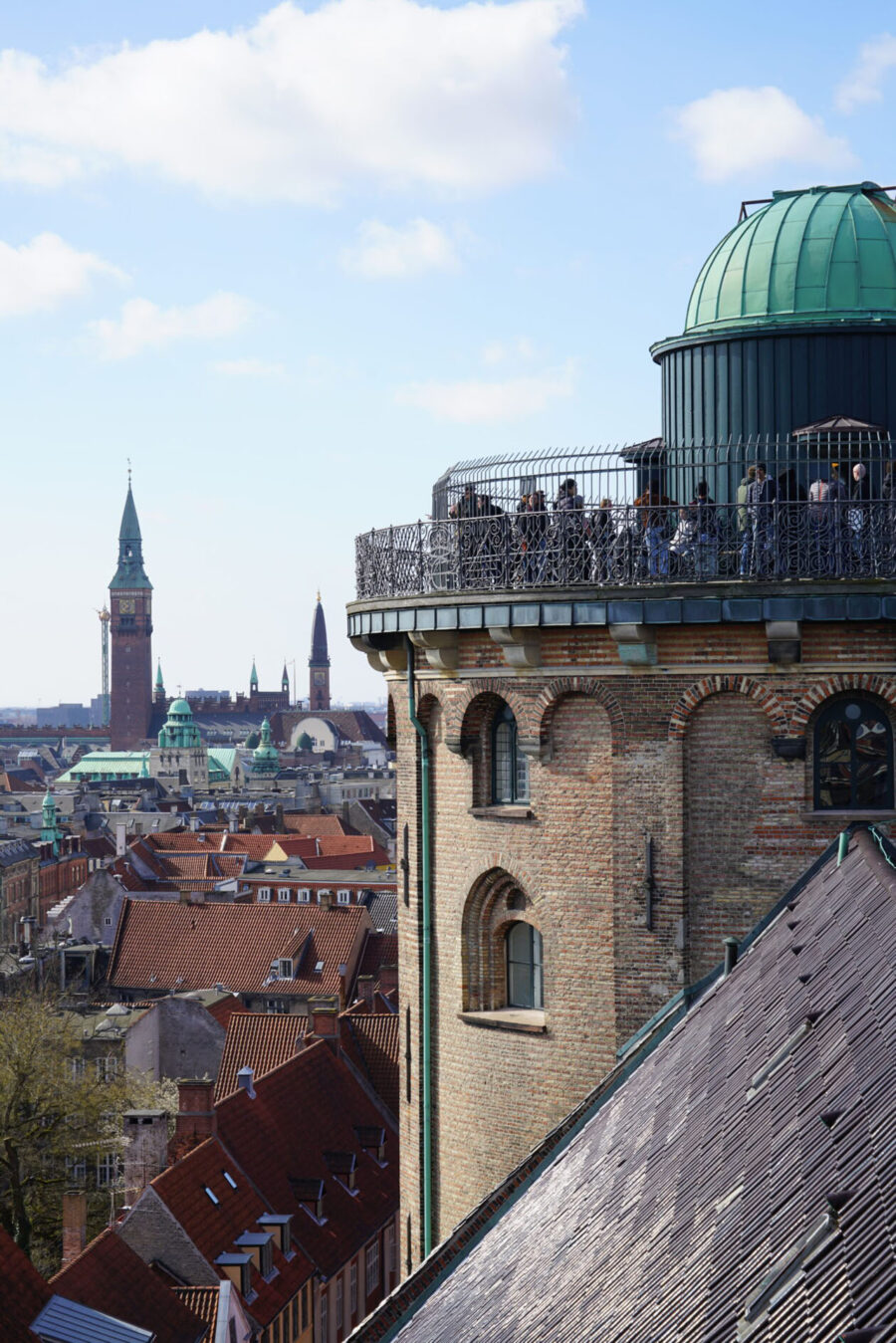
A major renovation of the Round Tower was planned from the late 1950s, including replacing the green roofing felt on the dome with copper. Work began in earnest in 1968. The Tower closed for two months, and the renovations continued even after it reopened to the public. The renovation was finally completed in 1970.
2026
The Observatory Restored
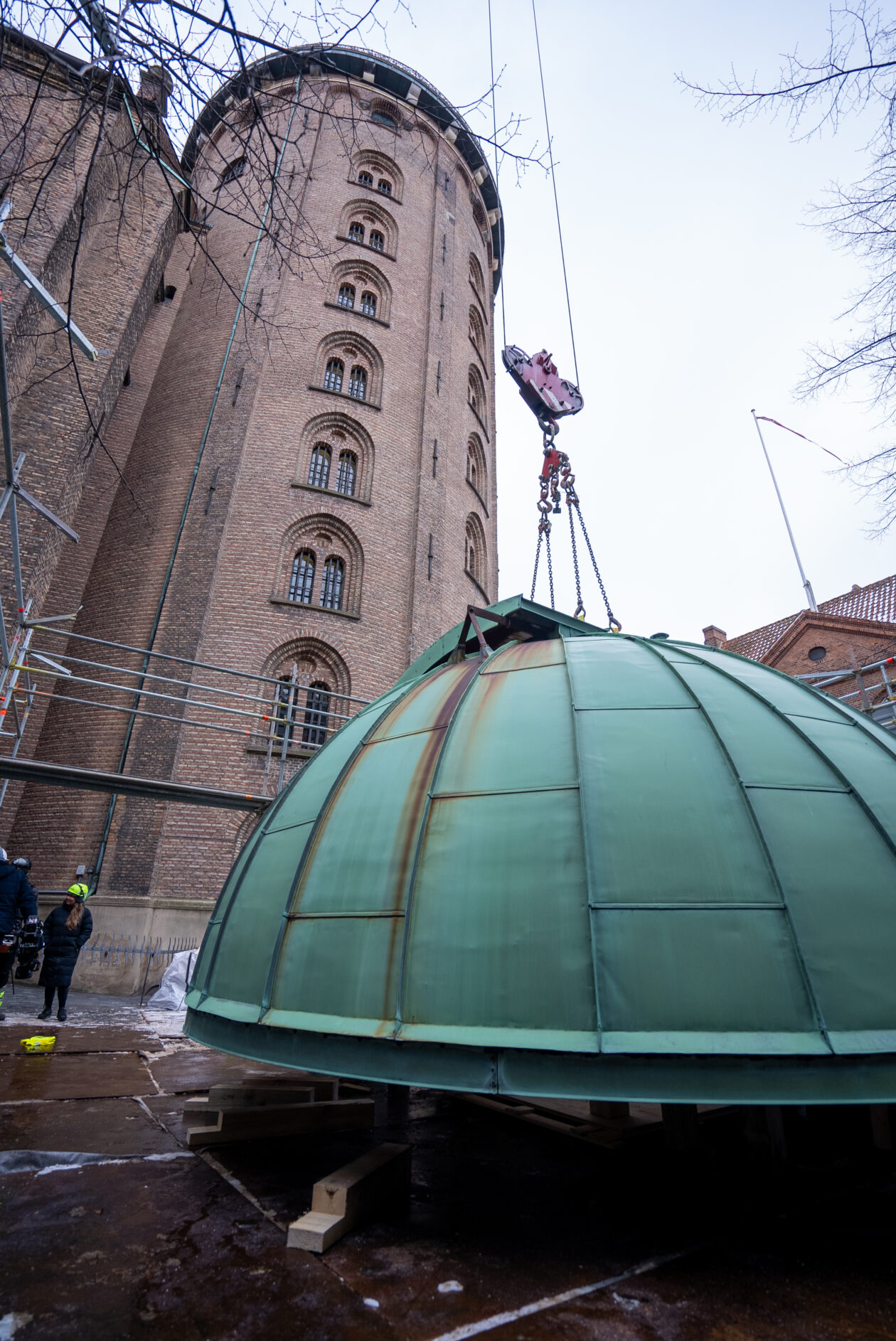
After many years of manned openings in the public Observatory, the dome and the Observatory underneath it was in need of careful restoration. At the end of 2025, the old refractor telescope from 1929 was sent for restoration, to return with even sharper visibility. The dome was removed mid-January 2026, restored in the square by Landemærket and reinstalled in April. Meanwhile, a new floor was laid in the Observatory. The dome and telescope are finished and ready for the public to view once again at the start of the Round Tower’s winter season in October.