The Fairy-tale Tower
Children and adults can experience Hans Christian Andersen’s fairy-tale universe in the Library Hall where the world of books inspired the Danish writer.
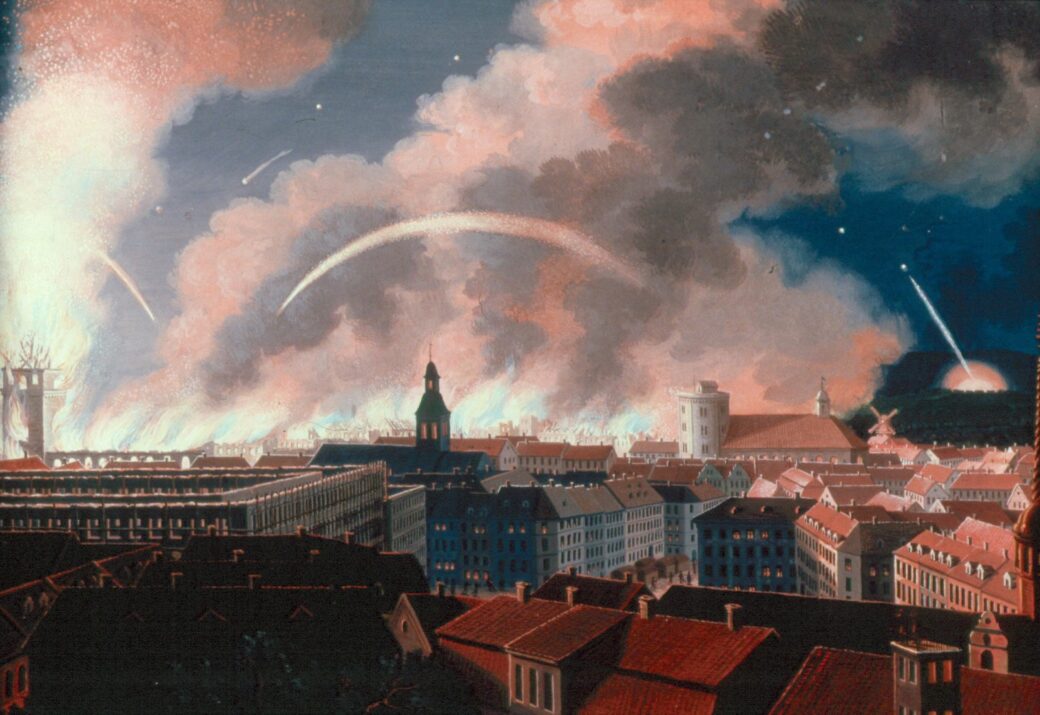
Hans Christian Andersen visited the Round Tower as one of the first things when he arrived in Copenhagen as a young man. Since then, he returned to the tower time and time again in his writings. The fairy-tale tower appealed to the fairy-tale writer above them all. How could it not be so?
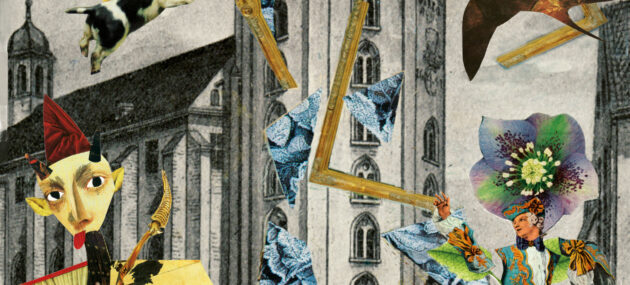
From February to April, children and adults can enter Hans Christian Andersen’s fairy-tale universe, as the Round Tower tells a number of his most imaginative stories in tableaux and words. Experience scenes from seven fairy tales that you know or think you know – or do not know yet. The exhibition is inspired by Victorian paper peepshows where the curious audience could explore small worlds of great beauty and a wealth of ideas.
The centre of the exhibition is a large circus tent from which you can peep into the fairy-tale scenes and try to guess which fairy tale they depict. In which fairy tale do you meet the dreamy umbrellas? And where do the flowers go to the ball at night?
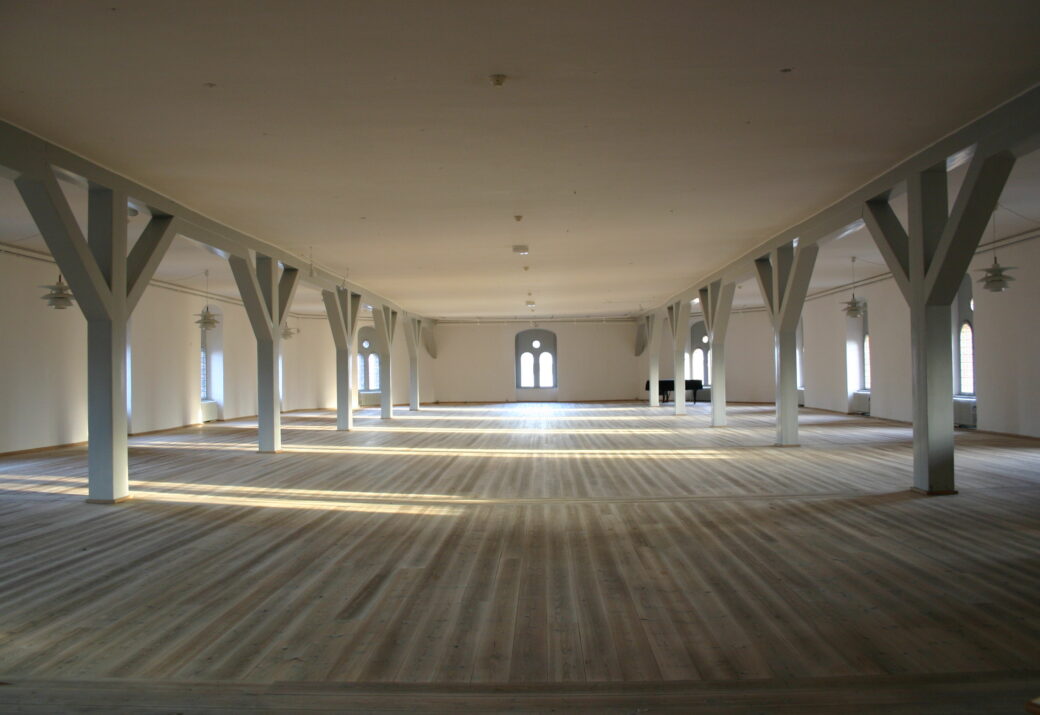
The exhibition is located in the Library Hall that once contained the University Library’s tens of thousands of volumes. This is where the young Hans Christian Andersen was inspired by the worlds of imagination in the books. In one of his poems he even lets the books jump off the shelves and throw themselves into a festive dance!
The exhibition is created by Round Tower in collaboration with selected artists.
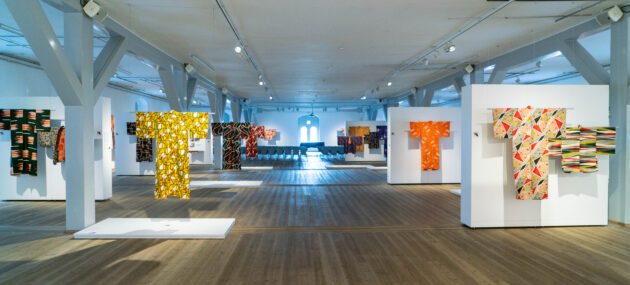
MEISEN KIMONO – Art for Wall and to Wear
Discover a world of bold colour and beautiful patterns when Danish artist and textile designer Henriette Friis showcases her large private collection of Japanese Meisen silk kimonos.
The whole world walks through the Round Tower. This summer, a colorful surge of inspiration from Japan envelops the Library Hall in an exhibition curating a large number of long and short kimonos from Henriette Friis’ private collection.
The Meisen kimono became popular in Japan in the beginning of the 20th century after a cultural and technological exchange between Japan and the West had made the silk kimono more economically accessible. Earlier, silk kimonos were reserved for the wealthy but with the Meisen kimono, middle-class Japanese women were able to afford fashionable silk kimonos in new, bold designs inspired by European art movements.
Cross-country inspiration
The handpicked pieces curated in the exhibition originate from the heyday of the Meisen kimono between 1910 and 1955 where Japanese kimono artists drew inspiration from Western art. Traditional figurative motifs were being challenged by large, colourful patterns and compositions, large stylized florals and non-figurative abstractions inspired by art movements such as Art Nouveau, Art Déco, De Stijl and Cubism.
In the 1920’s and 1930’s, these boomed in popularity among middle-class urban women who expressed themselves by dressing in the new designs. Later on, these very same kimonos and compositions inspired Western textile design, such as Finnish Marimekko.
“MEISEN KIMONO – Art for Wall and to Wear” is curated by Henriette Friis and presented in collaboration with the Round Tower. The exhibition is supported by the Toyota Foundation.
About Henriette Friis
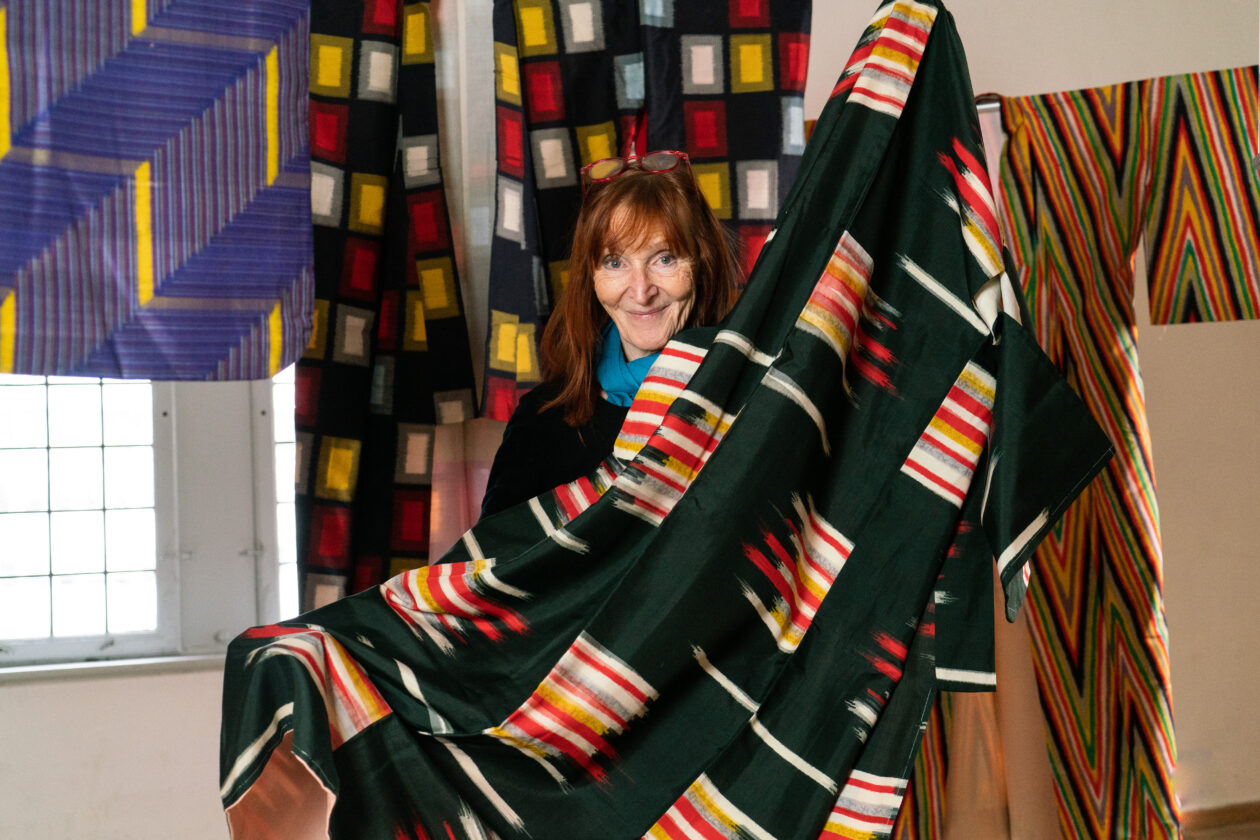
Henriette Friis has a background as an artist and textile designer. In the exhibition “Meisen Kimono – Art for Wall and to Wear” she presents silk kimonos from her own private collection. She first became aware of the Meisen kimono during her education in which she was tutored by a Japanese silk painter. Throughout the last 30 years, she has gathered an impressive collection of these special kimonos.

Throughout the exhibition period, a limited number of kimonos from Henriette Friis’ collection will be put up for sale in the Round Tower’s shop.
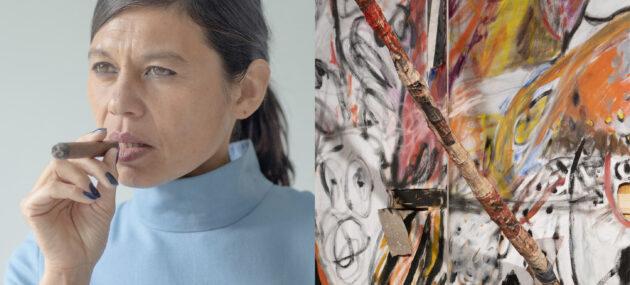
Transitions #2
The exhibition and the women’s life festival “Transitions #2” examines and communicates the many transitions of life from a women’s perspective through visual arts, talks, panel discussions, literature, music and performances.
Life is full of transitions: as we grow up, move out of home, start a family, enter the labour market, retire or face illness and loss on our way. It is a universally human condition.
Yet there are biological differences that make specific transitions in girls’ and women’s lives – we menstruate, are pregnant and give birth and often live longer than men. The transitions in women’s lives have been historically and culturally problematic. Through the eyes of the surroundings, the transitions and the woman’s body are often reduced to something shameful, sinful, medically imperfect or inferior.
Women have experienced to be categorized as sick and infirm due to “fluctuations and imbalances”, and instead of strong and vigorous, women have been disparaged as unpredictable and hysterical.
In “Transitions #2”, the transitions in women’s lives are examined through the eyes of girls and women.
Participating Artists in the Group Exhibition
Orsolya Bagala, Camilla Reyman, Elisabeth Toubro, Jeanette Land Schou, Lilibeth Cuenca Rasmussen, Maria Wæhrens, Mette Kit Jensen, Nanna Lysholt Hansen, Rikke Benborg, Sophie Dupont, Sophie Hjerl, Stense Andrea Lind-Valdan, Ursula Reuter Christiansen, Molly Haslund and Lærke Posselt.
The exhibition is originally curated by Julie Rokkjær Birch, The Women’s Museum, and Sophie Hjerl.
The Project Group Behind the Women’s Life Festival
Lotte Hvas, doctor
Christina Prinds, midwife
Therese Strand Kudajewski, vicar
Sophie Hjerl, artist
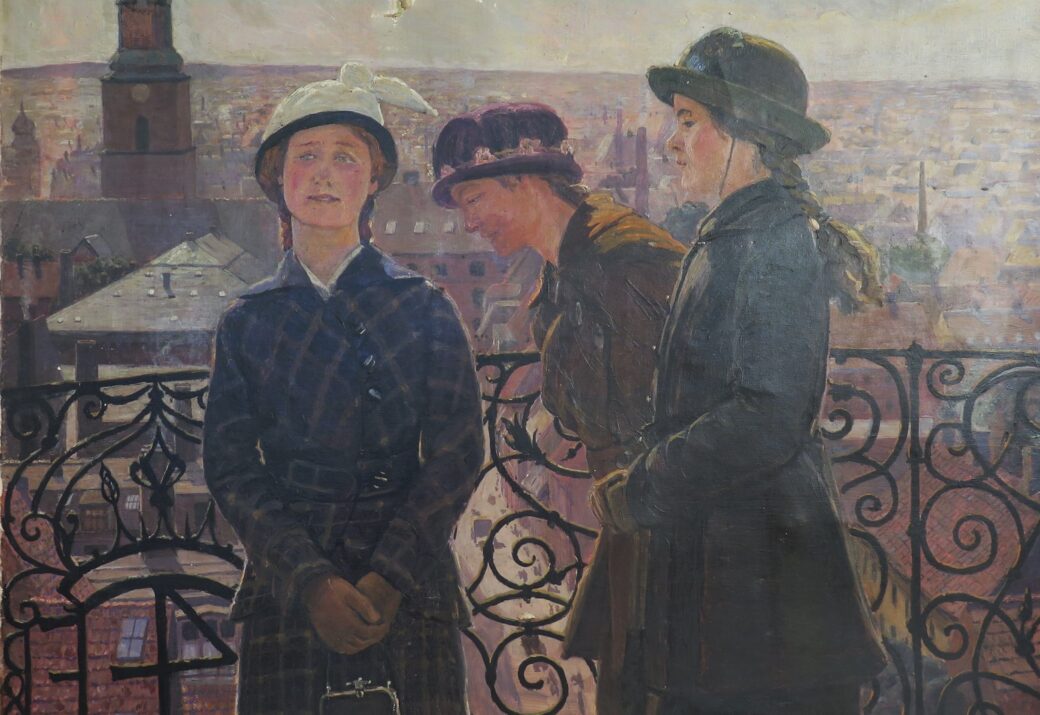
H.C. Ørsted Anew – the Beauty in Nature
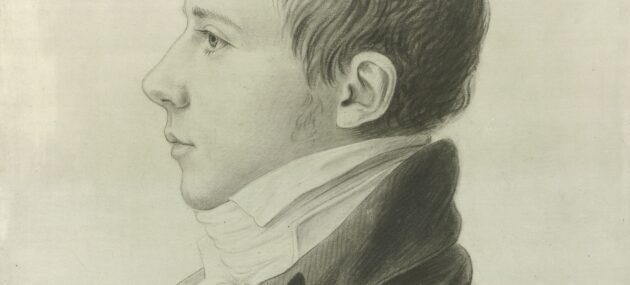
Hans Christian Ørsted was an important person in the scientific and cultural life of early 19th century Denmark. New exhibition presents a man, who was rooted in the Round Tower.
200 years ago, Hans Christian Ørsted discovered electromagnetism – a discovery which resulted in rapid scientific and technical development and made electricity an essential prerequisite for modern society.
It took Ørsted many years to reach this discovery. During that period, he made frequent use of the University Library, which was then located in the Library Hall with access from the Round Tower. In 1817 he additionally conferred two doctor’s degrees in the Trinity Church just below the Library Hall. So Ørsted was a frequent guest in the building complex that will show his exciting life and the unique discovery of the connection between electricity and magnetism.
For Ørsted, the discovery of electromagnetism was also a confirmation of the unity and beauty in nature: Everything in nature is connected.
The exhibition presents Ørsted as a scientist and prominent person in the cultural life in the period 1800-1850, whose work also had a great linguistic impact. He even influenced Hans Christian Andersen, who was inspired by Ørsted for several of his fairy tales.
The exhibition is arranged by the Society for the Dissemination of Natural Science.
On Saturday 19 September, part of the Library Hall will be used in connection with the World Voice Day. The exhibition is still open but if you want to experience it undisturbed, we recommend that you choose another day for your visit.
Extended: Swarm
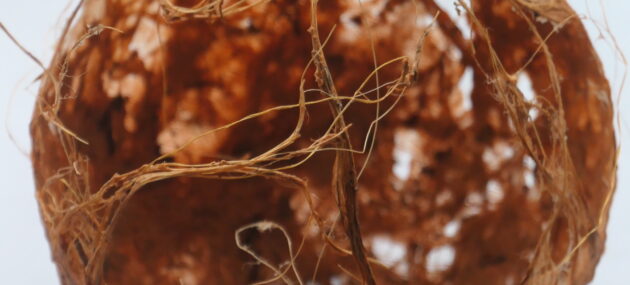
This autumn, Baskets4life is exhibiting in the Library Hall. “Swarm” is based on the groups fascination with natural materials, desing and weaving.
Baskets4life has existed since 2006 as a group of nine professional basket makers and artists. Over the years, the group’s collaboration has developed into deep friendships and an understanding of diversity. The common works and exhibitions are characterized by what one might in modern words call swarm intelligence.
A swarm seems controlled but is nevertheless unmanageable. It looks very organized but it is not easy to direct. Baskets4life connects the nerve and energy of a swarm with their way of working. They spread and gather in order to finally meet and unite the many elements in the common expression of the exhibition. Baskets4life is connected by natural materials, which is clearly reflected in the works. The group has a very experimental and curious approach to materials and techniques.
The exhibition consists of a large joint project with countless small elements that are suspended in one or more swarms. In addition, they will each exhibit individual, personal works. Small families in the more traditional weave field but also more experimental objects.
More information follows – see also Baskets4life.dk
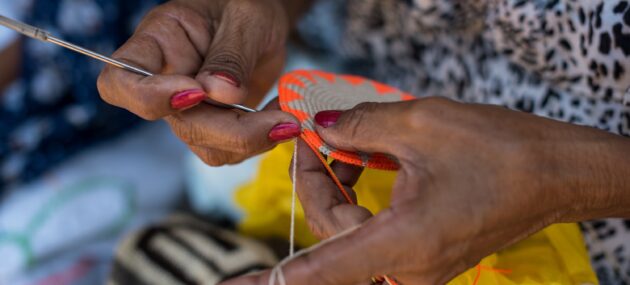
1 + 1 = 11
Danish and Colombian craftsmanship are interwoven at the exhibition 1+1=11, when designers and craftspeople from two cultures interpret each other’s work.
In northern Colombia, the Wayuu people are fighting a battle against hunger, climate change, corruption and the pursuit of natural resources by global corporations. Despite these challenges, their rich culture continues, with its distinctive form of craftsmanship playing a central role. Wayuu women learn characteristic weaving and crocheting techniques in their early teens and refine them through their entire lives.
In the exhibition, 11 Wayuu women and 11 Danish artisans and designers interpret each other’s work, with unique designs and ideas emerging – across cultures, languages and traditions.
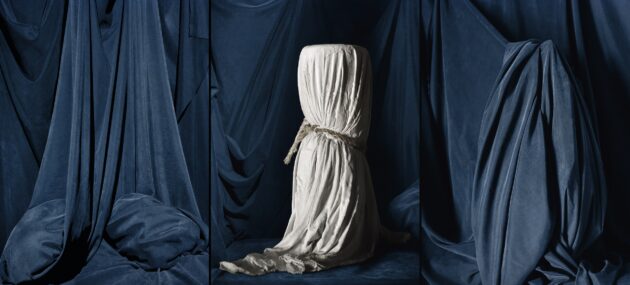
Sculpture to Sculpture
Sculpture formulates what language cannot say. In the group exhibition “Sculpture to Sculpture”, artists Tina Maria Nielsen, Milena Bonifacini, Carl Emil Jacobsen, Julie Stavad and Valerie Collart pay tribute to the sculpture as something that awakens the senses and examines form and materiality. From papier mache to concrete, from photogravure to bronze castings of a cachalot.
The exhibited works span from the abstract and reference-free to the recognizable and engage in a dialogue with the visitors and the architectural details of the Library Hall that houses the exhibition. Resonating across artistic disciplines are the theories and the dictum of late Danish sculptor Willy Ørskov that the sculpture’s content is sculpture. The title of the exhibition is a loving homage to this practice, which has influenced the exhibiting artists in various ways – consciously or unconsciously.
“Sculpture to Sculpture” is curated by Henriette Noermark.
Supported by the Danish Arts Foundation and L.F. Foghts Fond
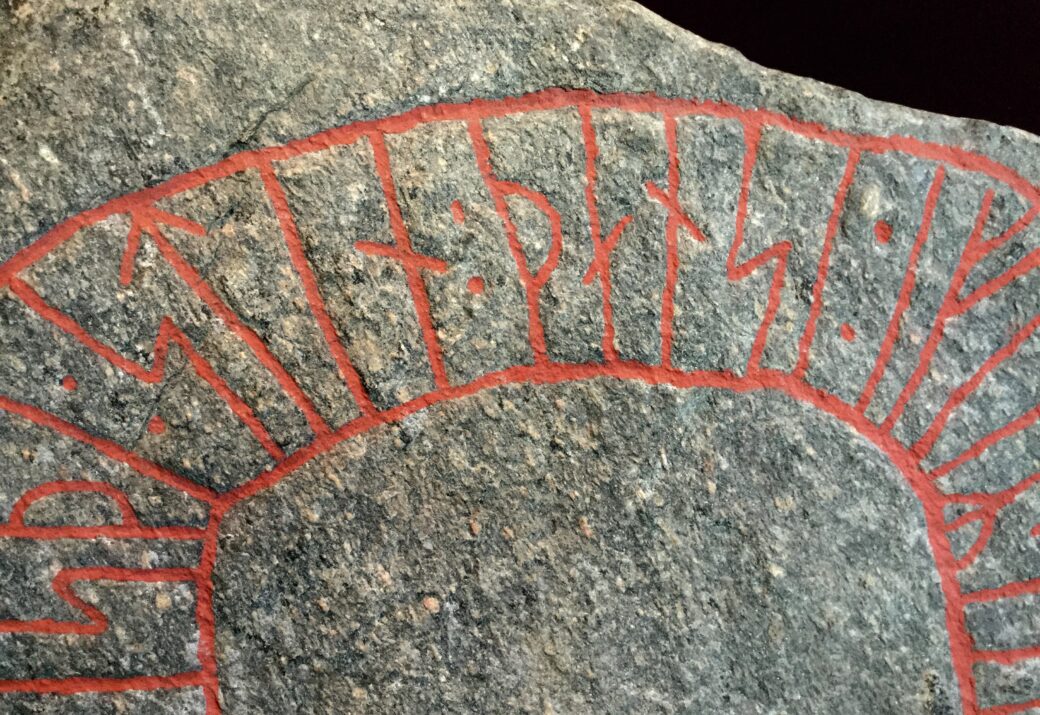
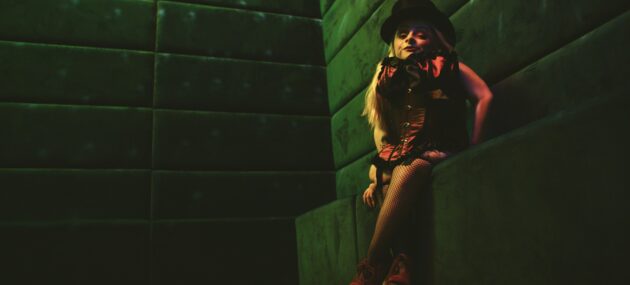
Ablutions of the Tongue
The art exhibition “Ablution of the Tongue” is a transdisciplinary group exhibition which deals with the concept of othering, body and identity.
Othering can be defined as a set of dynamics, processes, and structures that engender marginality and persistent inequality across any of the full range of human differences. Dimensions of othering includes, but are not limited to, religion, sex, race, ethnicity, socioeconomic status (class), disability, sexual orientation or any socially significant marker or characteristic.
The exhibition will explore conditions under which processes of othering seem to arise and in which specific group-based identities become socially significant. The artists will work through these complex networks of stories, addressing visions of other possible worlds than the norm where emotional resonance is used as evidence through the power of poetry, aesthetics and fiction.
Participating artists: Sian Kristoffersen (DK), Stella Geppert (DE), Katrin Ströbel (DE), Kristina Steinbock (DK), Lissa Rivera (US), Linda Lazer (N), Peter Birkholm and Michael Schiøler (DK).
The exhibition is initiated by Kristina Steinbock and co-curated by Louise Lassen Iversen. The exhibition has been realized with the support of:
The Danish Arts Foundation
The Goethe-Institute
Grosserer L.F. Foghts Foundation
The council of Visual Arts – Københavns Kommune
Project “Ablutions of the Tongue” is part of the German-Danish Cultural Friendship Year 2020.


Double Happiness
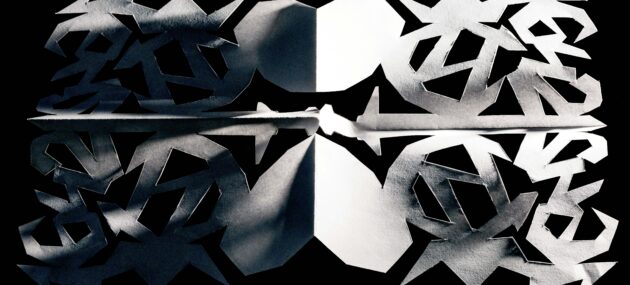
Director and choreographer Steen Koerner and composer Yo Akim (Joakim Hjejle) have created the art project “Double Happiness”, which is a modern interpretation of the fairy tale writer Hans Christian Andersen’s paper cuts and their roots in China.
Inspired by Hans Christian Andersen’s mix of styles, the exhibition “Double Happiness” draws the poet’s thinking into the present and links his paper cuts to street art, music and Chinese philosophy.
The paper cuts find entirely new forms of expression by meeting electric boogie, tutting dance, film, photography and lyrics in an exhibition that actively engages the audience. The exhibition is accompanied by music with contributions from a number of Danish singers.
Steen Koerner Studios is an urban art company engaging in dance, music, poetry, graffiti, art film, architecture, city space development – and first and foremost theatre. The studio is driven by a desire to learn and develop through experiments, projects and co-operations, based on the ideas from Gesamtkunst.
Steen Koerner Studios is based on the artistic work of Steen Koerner, who is director, choreographer, concept developer and originally emerging from street dance and an urban environment. He founded the company together with Philip Johnsen, who has been working with Steen Koerner since early days. As of end 2018 the company is owned by Steen Koerner himself under the name Steen Koerner Studios IVS.
Steen Koerner is well-known for his contemporary take on classic stories. He started his career as a self-taught robotic dancer in 1982 and travelled the world already at an age of 14 to take up battle with the best from Berlin, London, Paris and New York. Since than he has been a driving force in the urban-arts community and was in 2004 awarded The Hip Hop Lifetime Achievement Award.
It is however as a director that Steen Koerner is best known. His version of “The Nut Cracker” brought him The Theatre Award, The Danish Arts Council’s three years’ work grant and earned him a place in the Danish Cultural Canon.
Around the Moon
Exhibition 5 October to 3 November 2019
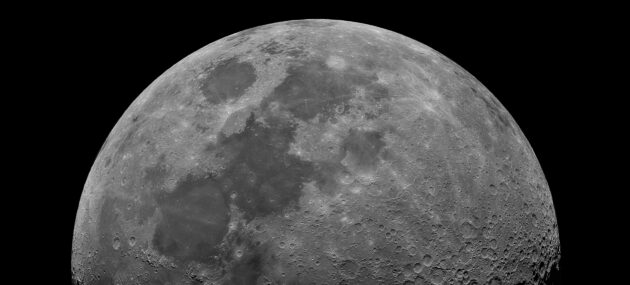
The exhibition “Around the Moon” marks the 50th anniversary of the first manned mission to land on the Moon on 20 July 1969.
The Danish Astronautical Society presents an exhibition that forms part of the International Space Days, and during the exhibition period there will be events, talks, film shows and much more.
Learn more at Spacedays.dk