Finissage: Crystalline Memories of Deep Time
Artist Claus Spangsberg creates fascinating images at the intersection of art and science. Meet him in the exhibition on its very last day.
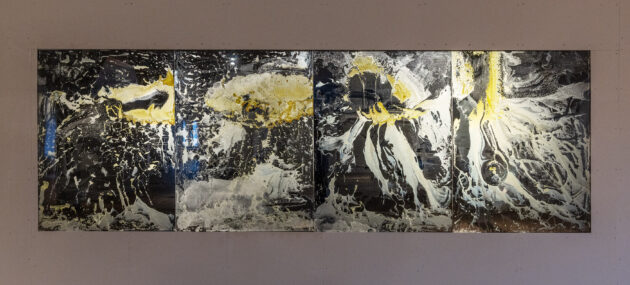
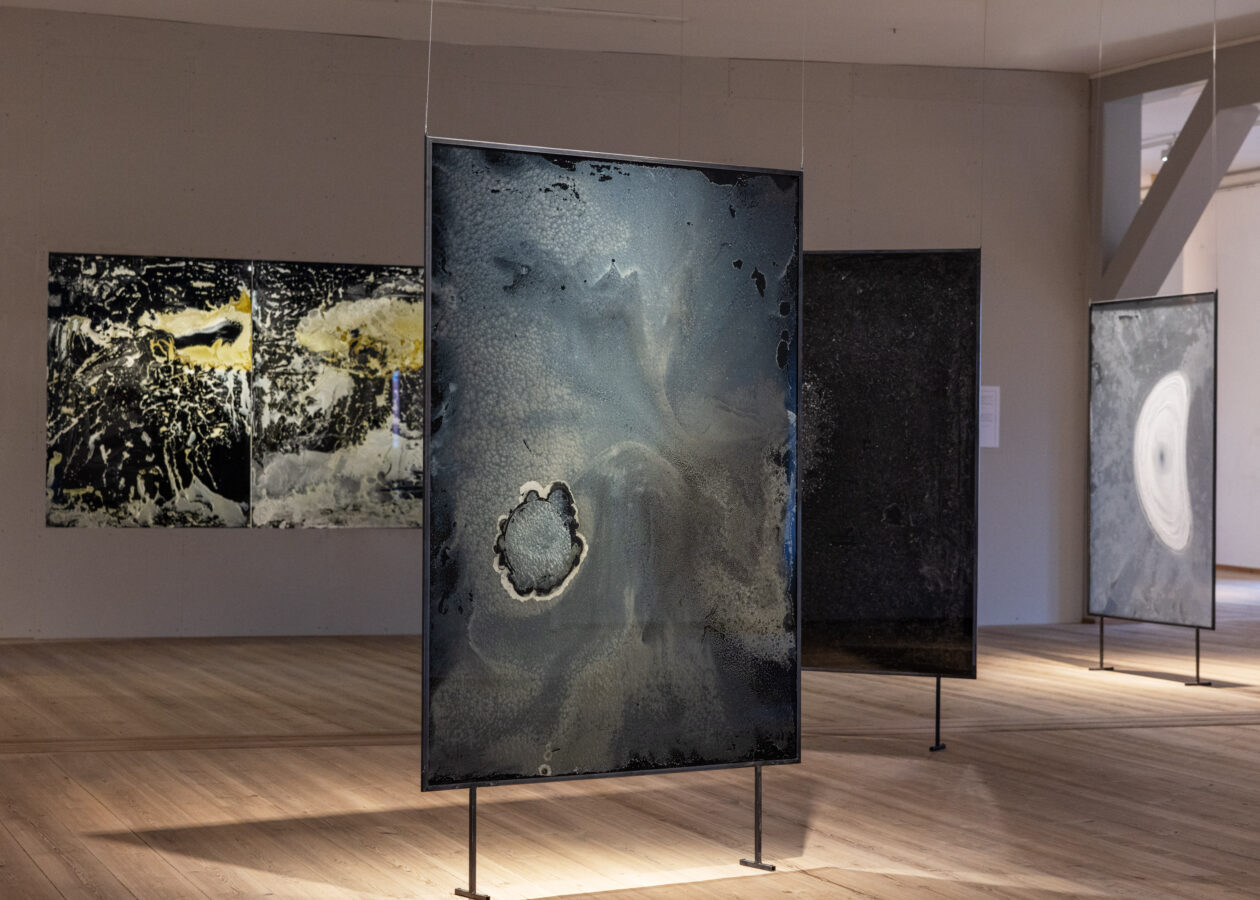
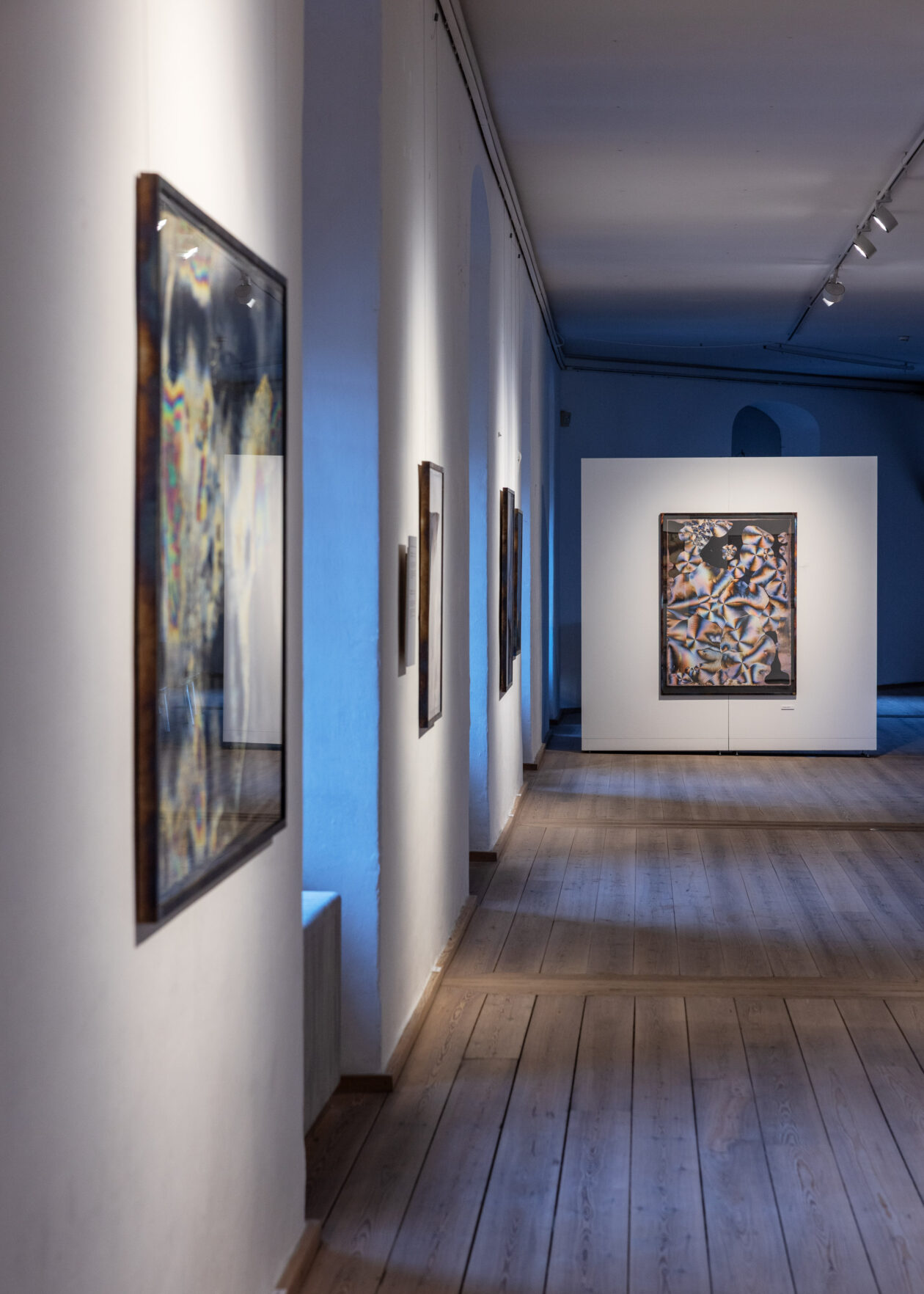
Claus Spangsberg specializes in microscopy and crystallization, creating images using chemical substances, DNA, and amino acids. In the exhibition Crystalline Memories of Deep Time, he explores some of the oldest materials known to us and presents various meteorites and components from the biochemical processes of the primordial soup. Materials such as crystallized sulfur, amino acids, and enzymes are presented as large-scale microscopic images or displayed in specially constructed screens with polarizing filters, allowing beautiful colors and patterns to emerge from the materials’ structures.
Meet Claus on the final day of the exhibition, when you will have the opportunity to ask questions about the works, be guided through the exhibition, and hear more about his artistic process.
The exhibition is supported by
Grosserer L.F. Foghts Fond
Den Hielmstierne-Rosencroneske Stiftelse
Knud Højgaards Fond
Poul Johansen Fonden
Lizzi og Mogens Staal Fonden
OVODAN BIOTECH
Københavns Kommune – Rådet for Visuel Kunst


Ole Rømer and the Great Discovery
In 2026, the Round Tower marks the 350th anniversary of Ole Rømer’s groundbreaking discovery of the speed of light with an extensive programme. From February and throughout the year, visitors can experience the tower’s historical introductory exhibition, which tells the story of the discovery, the person behind it, and Rømer’s connection to the Round Tower.
350 years ago, the astronomer Ole Rømer made his pivotal discovery that light has a finite speed. But how did he arrive at this conclusion? What does the discovery mean for us today? And who was he beyond this achievement—the man with many talents and a large wig?
Alongside four rotating special exhibitions on light presented over the course of the year, you can experience the Round Tower’s own exhibition on Ole Rømer and gain deeper insight into the man, the discovery, and his relationship to the Round Tower.

Please note that the exhibition cannot be experienced at times when the Library Hall is temporarily closed due to events or during the construction of changing special exhibitions. Check our landing page rundetaarn.dk before your visit, where current closures will be listed at the top of the page.
Tower Talk: Ad Lucem
Explore the art-science photo exhibition “Ad Lucem” together with its two creators, artist Cecilia Ömalm and astronomy professor Göran Östlin.
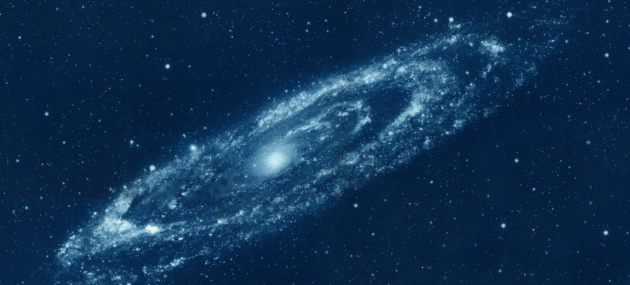
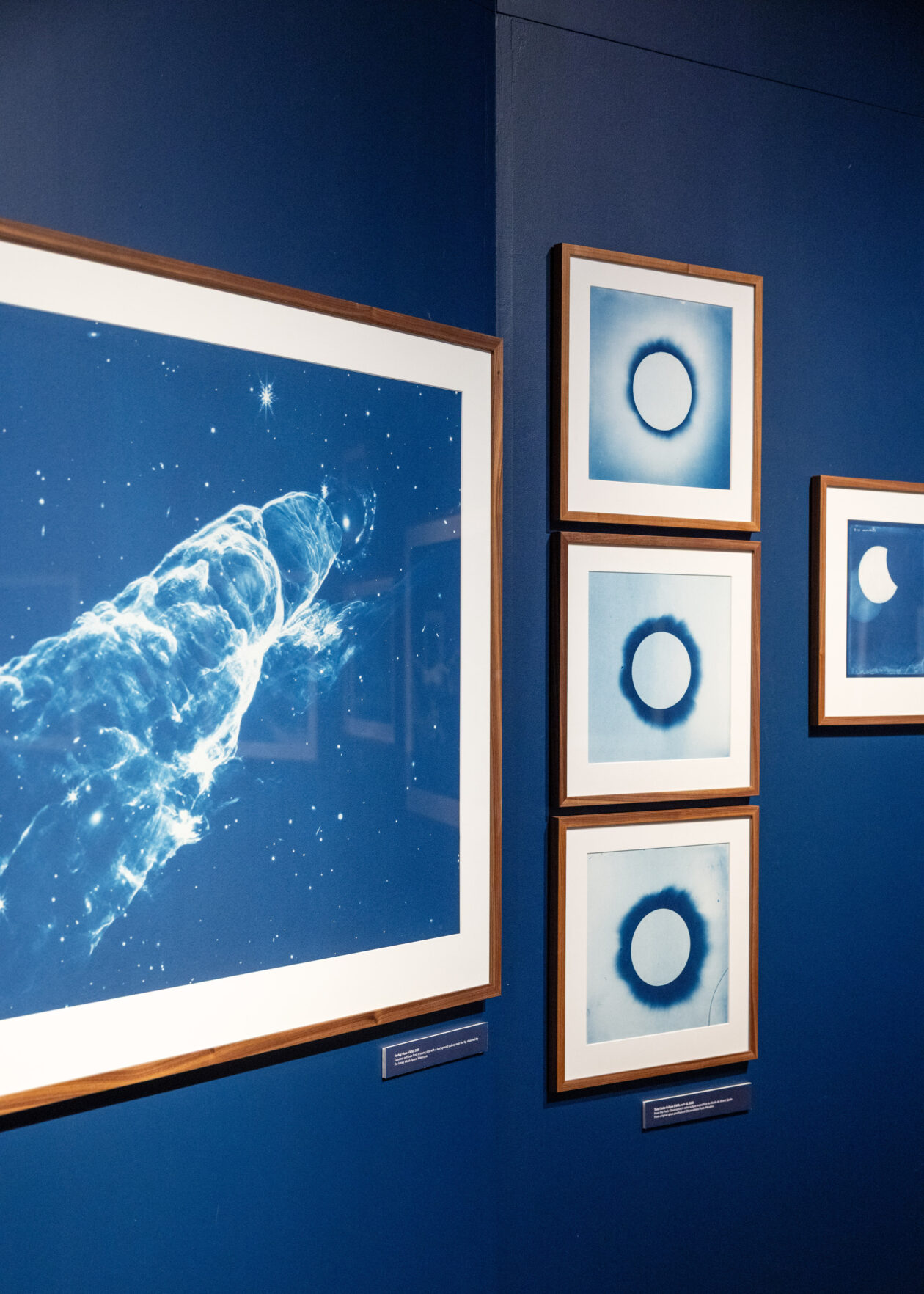
How does light from distant galaxies connect us across time and space? Immerse yourself in mesmerizing, deep-blue works created with cyanotype – a unique process where iron salts mixed into UV-sensitive solutions, combined with sunlight, form images in those unmistakable blue tones.
Ömalm and Östlin recreate the Universe’s light and astronomical imagery using both historic glass-plate negatives and modern digital sensors. Each piece is printed by hand, and when the Sun develops these celestial images, it becomes a poetic act: the works are reborn by the very light from the sky toward which the telescopes once pointed.
“Ad Lucem” is the duo’s largest solo exhibition to date, featuring 40 works including a new piece inspired by Danish astronomer Ole Rømer’s measurements of the speed of light – presented in a spatial design reflecting the tower’s architecture and evoking the feeling of stepping into an observatory.
Cecilia Ömalm and Göran Östlin will guide visitors through the exhibition and share insights into their cyanotype practice. For those eager to experience the craft firsthand, the artists will host a cyanotype workshop on 7 February, open to both children and adults.
Before and after the tour, guests are welcome to enjoy the exhibition at their own pace and purchase refreshments from the bar in the Library Hall. Admission to the Round Tower is included in the ticket.
Please note: The talk will be held in English.
The event is part of the program for Light Year 2026 – a year-long celebration of light and the 350th anniversary of Ole Rømer’s groundbreaking discovery of the speed of light.
Light Echoes
Can the past and the present coexist? How does light shape our understanding of time? Where does the known end, and where does the unknown begin? And what happens when artists and scientists explore this boundary together?
These questions form the starting point for the upcoming exhibition “Light Echoes,” presented by the Round Tower and the Niels Bohr Institute’s Yonder | Art•Science Program. This program invites artists and researchers to experiment, develop new methods, and combine data-driven research with artistic expression, welcoming art into the research environment as a collaborative partner.
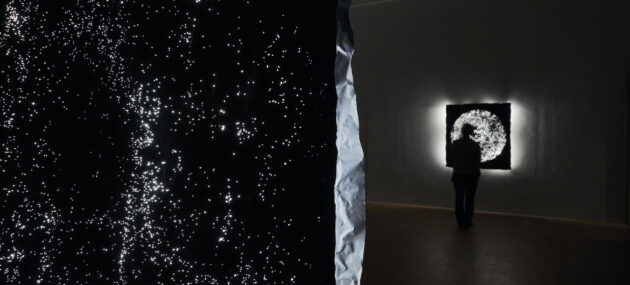
“Light Echoes” is an exhibition and research project that explores the relationship between our experience of light and our understanding of time. The exhibition presents four installations and a soundscape created by Lea Porsager, Jo Verwohlt & Pieter Maria Steyaert, Ligia Bouton, and Semiconductor, in close collaboration with astrophysicists from the DARK research group.
Across Time and Space
The exhibition’s title refers to the astronomical phenomenon known as a ‘light echo’, which challenges our conventional chronological understanding of time: when light from a sudden outburst encounters interstellar dust, some of it is reflected and scattered toward Earth, where it may arrive centuries after the event itself. Acting as a delayed reflection of the past, the phenomenon allows researchers to observe cosmic events anew across the centuries – such as in 2008, when scientists successfully detected a light echo from Tycho Brahe’s Stella Nova (1572), thereby gaining new in-depth insight into that same cosmic event more than 400 years later. In the exhibition, the phenomenon serves as both a scientific framework and a poetic metaphor for the possibilities that emerge from the collaboration between art and science. Here, knowledge transforms as it moves between different disciplines, contributing to new ways of viewing and understanding the world.
Developed by the newly established Yonder Art•Science at the Niels Bohr Institute, “Light Echoes” unfolds as a constellation of interdisciplinary voices:
Participating Artists
Jo Verwohlt & Pieter Maria Steyaert (DK/BE)
Lea Porsager (DK)
Ligia Bouton (USA)
Semiconductor (UK)
The artists are working in dialogue with astrophysicists from the DARK Cosmology Centre research unit at the Niels Bohr Institute, including Jo Verwohlt, Jens Hjorth, Clara Ferreira Cores, Christa Gall, Marianne Vestergaard, Radosław Jan Wojtak, Judit Prat and William Baker among others.
“Light Echoes” is curated by Irene Campolmi, Curator at Large and Co-founder, Yonder Art•Science, Copenhagen and Curator for Art, Technology and Society at Amos Rex, Helsinki.
The exhibition is presented by the Round Tower, Yonder | Art•Science, and the Niels Bohr Institute as part of the annual program LIGHT YEAR 2026 – the Round Tower’s commemoration of the 350th anniversary of Ole Rømer’s discovery of the speed of light.
The exhibition has been made possible with support from the New Carlsberg Foundation, the Dr. N.P. Wieth-Knudsen Observatory Foundation, Villum Fonden, Augustinus Fonden and Fake Foundation.

Please note that the exhibition cannot be experienced at times when the Library Hall is temporarily closed due to events or during the construction of changing special exhibitions. Check our landing page rundetaarn.dk before your visit, where current closures will be listed at the top of the page.
Refractions of Ice
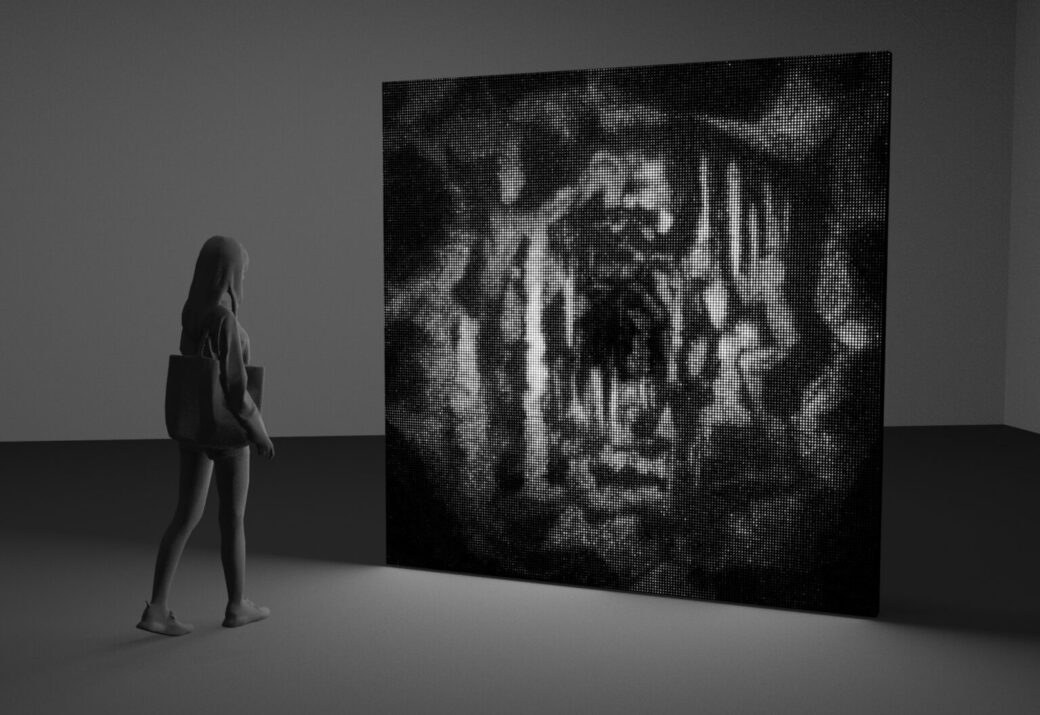
What stories does the ice hold? In “Refractions of Ice”, art and ice core research melt together in a visual exploration of the deep ice and the climate memory of our planet.
“Refractions of Ice” is a visual investigation of deep ice in the Greenland Ice Sheet and Antarctica, created by Visual Science Studio in collaboration with researchers from Ice, Climate and Geophysics at the Niels Bohr Institute, University of Copenhagen. Through film, images, sound, and poetry, scientific research is transformed into a sensory experience that creates space for reflection on nature’s transformations and humanity’s role within them.
⭐⭐⭐⭐⭐
– KULTURINFORMATION
A Deep-Frozen Diary
The exhibition takes its point of departure in ice as a witness to the planet’s history: a frozen memory containing traces of the past. Ice in the great ice caps of Greenland and Antarctica preserves information about Earth’s climate changes over millennia. Each year’s snowfall captures and encapsulates countless details about our atmosphere and climate at the moment the snow forms. Year after year, new layers of snow are added, gradually compressed into ice, sinking deeper into the ice sheet and forming a several kilometer deep climate archive where geological time becomes visible in layers. No two years are alike, and each layer has its own unique story to tell: of gradual changes, but also of abrupt shifts.
“Ice cores from the great ice caps tell us, among other things, about the coming and going of ice ages, major volcanic eruptions, forest fires, and dust storms—and in more recent times, about human pollution and global warming,” says ice core researcher Anders Svensson, part of the research team from the Niels Bohr Institute.
Light as Method
This exhibition is part of the LIGHT YEAR 2026 program at the Round Tower. A full year of experiences marking the 350th anniversary of Ole Rømer’s groundbreaking discovery of the speed of light.
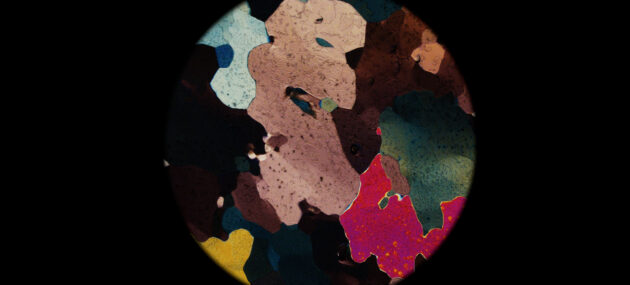
Light is a central element in both the exhibition and parts of the research behind it: using polarized light from laboratory lamps, the crystal structures of ice emerge in colors and patterns that reveal new details and insights into the state and movement of ice.
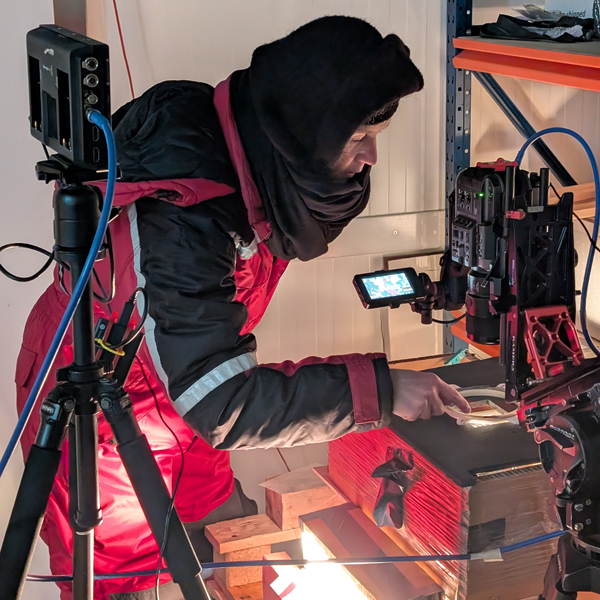
“Together with the researchers, we have spent days in a large freezer filming ice up to two million years old as it dissolves. Within the microscopic crystal structures lie traces of planetary movements and shifts. But ice is not just a material that is disappearing—it is also the planet’s memory. A visual warning of the imbalances underway, and a testimony to a world we will not get back,” says artist Maja Friis from Visual Science Studio.
Experience “Refractions of Ice” from June 26th to September 20th in the Library Hall at Rundetaarn, accompanied by a series of events with researchers, artists, and journalists.
Visual Science Studio communicates science in an immersive and sensory way. Through installations, films, and talks, they transform intangible data into tangible experiences, enabling people to connect emotionally with research and climate change through aesthetics.
Supported by:
- Knud Højgaard Foundation
- William Demant Foundation
- Aage og Johanne Louis-Hansens Fond
- Novo Nordisk Foundation
- Augustinus Foundation
Please note that the exhibition cannot be experienced at times when the Library Hall is temporarily closed due to events or during the construction of changing special exhibitions. Check our landing page rundetaarn.dk before your visit, where current closures will be listed at the top of the page.

AFTERGLOW. Conversations on Light
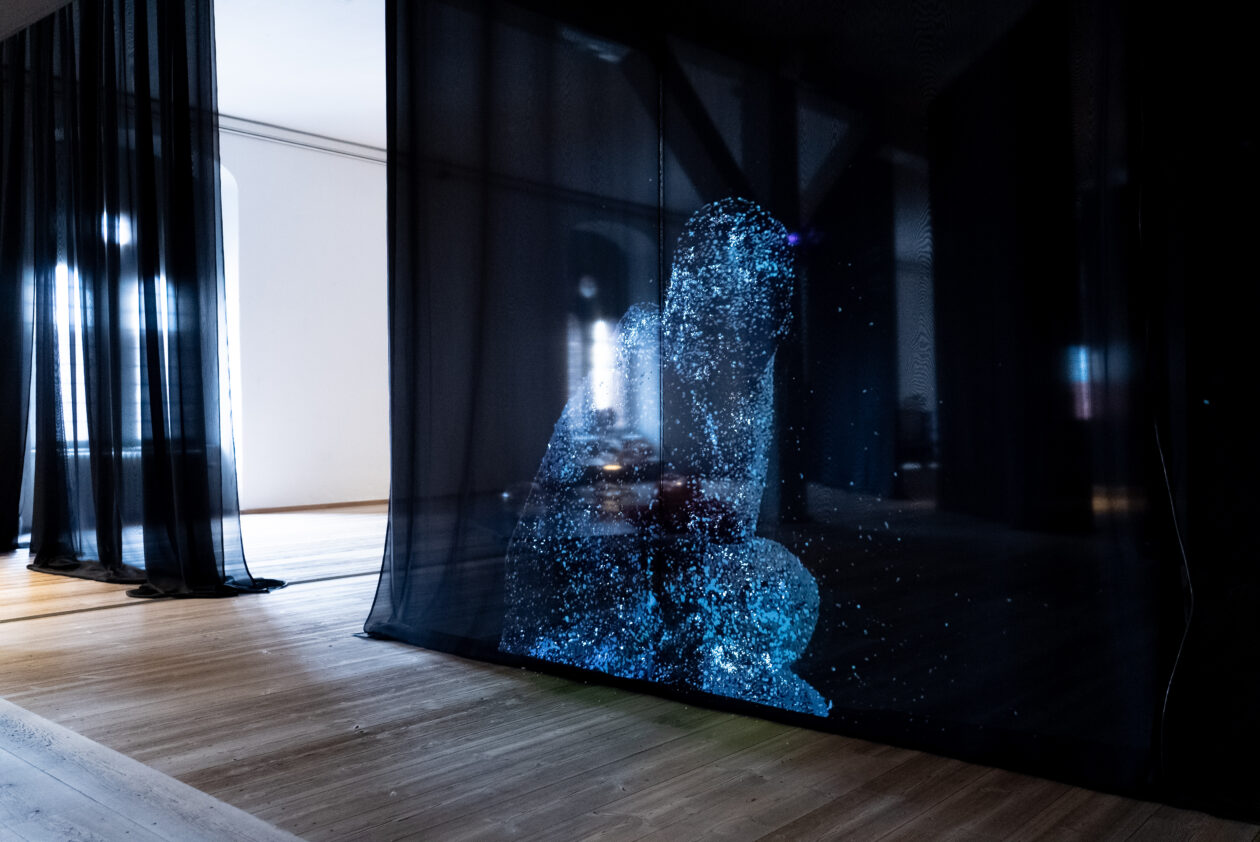
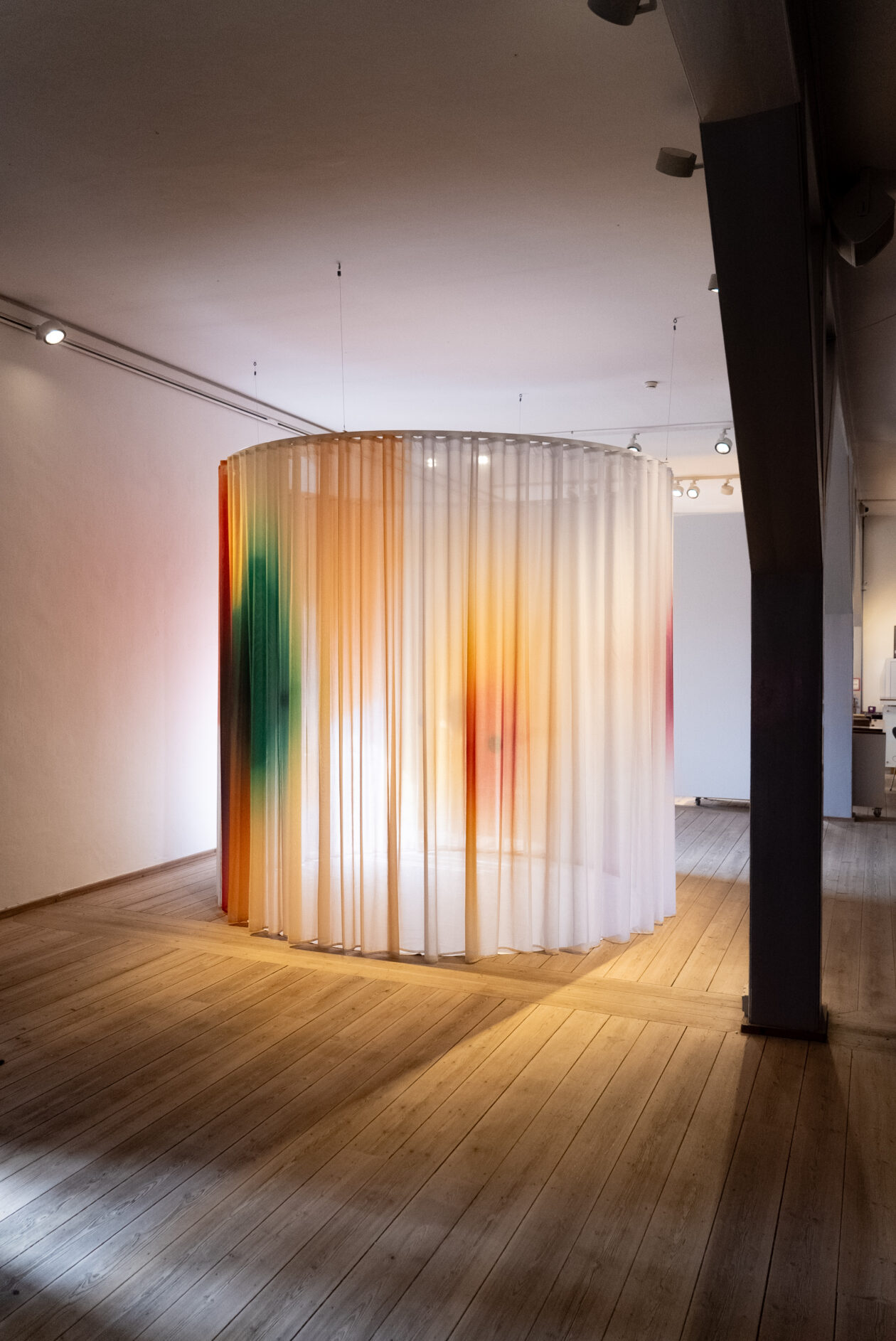
Experience a sensory and thought-provoking exploration of light as both a physical phenomenon and an artistic material, as eight artists interpret light inspired by the world of science.
Both art and science share a fascination with the speculative and the mysterious, and with the sense that behind the fog lies a clarity that reveals itself in fleeting glimpses. Science tests and confirms hypotheses, while art explores the world through sensory experiences that inspire reflection. Together, they can help us see the world in a new light and create new narratives about reality.
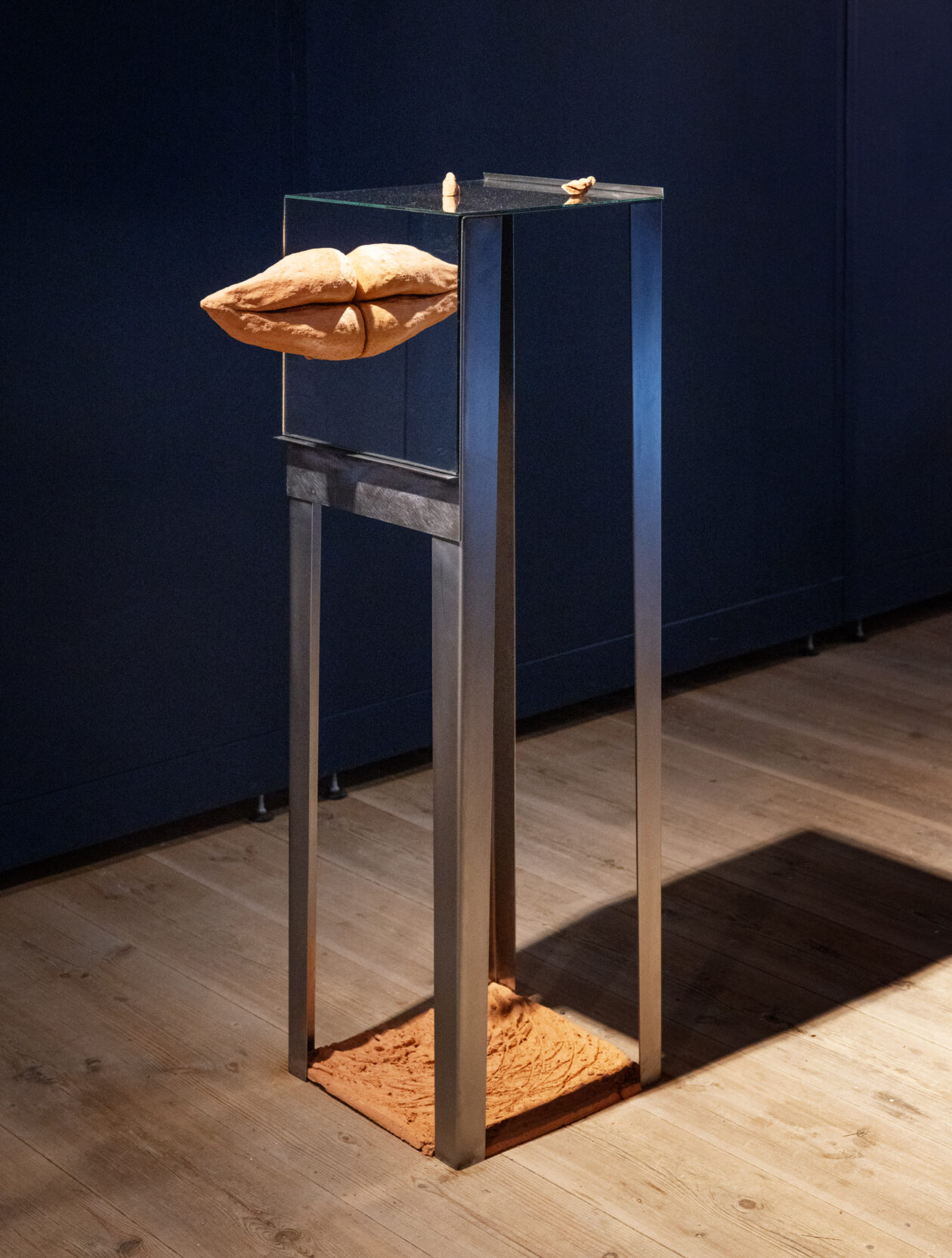
The exhibition “AFTERGLOW: Conversations on Light” invites visitors to the Round Tower into a space where visually captivating works connect science with artistic expression. Drawing on quotes and research from prominent scientists such as Jocelyn Bell Burnell, Neil deGrasse Tyson, and Vera Rubin, eight artists each take selected scientific voices and phenomena as their starting point, interpreting them in their own visual language through works spanning various media and forms – from glass and video to photography and installation.
“The exhibition does not communicate research directly, but explores different perspectives on light somewhere between what we know and what we feel. The exhibition’s subtitle, conversations on light, points precisely to this meeting between two languages: the artistic and the scientific,” say the exhibition’s curators, Biba Fibiger and Veronica Rigét, who also contribute works themselves.
Participating artists:
Kirstine Roepstorff
Nicolai Howalt
Pernille With Madsen
Matilde Duus
Laila Svensgaard
Thorbjørn Lausten
Biba Fibiger
Veronica Rigét

The exhibition is created by the curatorial collective Perelin, Nattens Skov, founded by Veronica Rigét and Biba Fibiger.

The exhibition and/or individual works are supported by:
Augustinus Fonden
Statens Kunstfond
Ny Carlsbergfondet
Louis-Hansen Fonden
Grosserer L.F. Foghts Fond
Knud Højgaards Fond
Københavns Kommune – Rådet for Visuel Kunst
Batch Productions
Ernst B. Sund Fonden
Dansk Tennis Fond
Poul Johansen Fonden af 1992
Hartmann Fonden
Please note that the exhibition cannot be experienced at times when the Library Hall is temporarily closed due to events or during the construction of changing special exhibitions. Check our landing page rundetaarn.dk before your visit, where current closures will be listed at the top of the page.
Ad Lucem
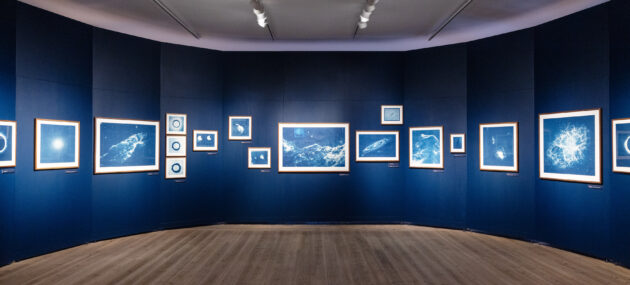
Light Year 2026 opens with Ad Lucem – an artistic and scientific collaboration between artist Cecilia Ömalm and professor of astronomy Göran Östlin – a project that beautifully unites art and science in an exploration of how light from distant galaxies connects us across time and space.
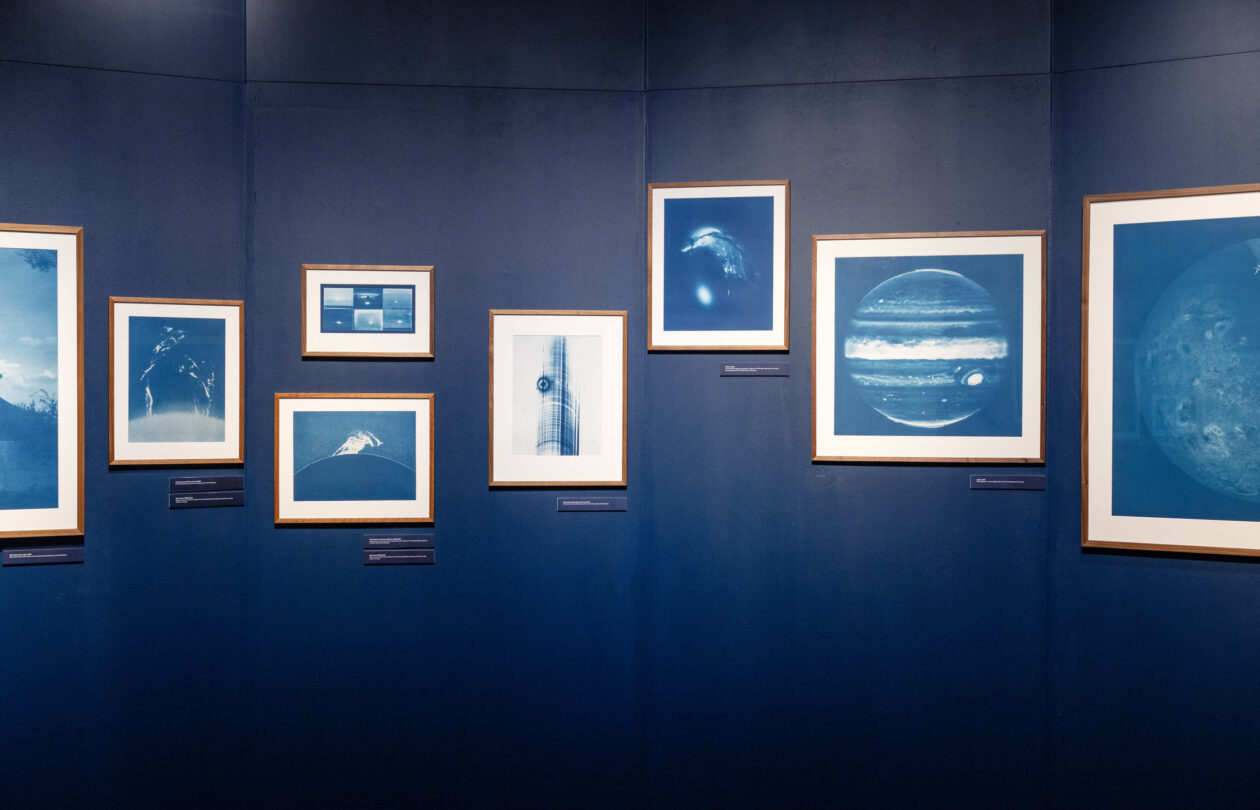
Experience captivating, deep-blue photographic works created with cyanotype – a unique technique invented by astronomer John Herschel, where iron salts mixed to result in UV-sensitive solutions, and sunlight combine to form images in characteristic shades of blue.
Ömalm and Östlin recreate the light of the Universe using both historical glass plate negatives and modern digital image sensors. Each work is hand-printed, and when sunlight develops these celestial images, it becomes a poetic act – a rebirth of light from the same sky the telescopes once pointed toward.
Ad Lucem at the Round Tower marks the duo’s largest solo exhibition to date, featuring 40 works – including a new piece inspired by Ole Rømer’s groundbreaking measurements of the speed of light – presented in a design that mirrors the tower’s shape and evokes the atmosphere of an observatory.
On the last day of the exhibition, April 6, the artists Cecilia Ömalm and Göran Östlin will be present at the exhibition for an informal talk about the works, the technique, or anything else visitors might be curious about. It will also be possible to buy a glass of wine.
Thank you to the Royal Swedish Academy of Sciences and Observatoire de Paris for allowing the use of their old photographic negatives.
Cecilia Ömalm (b. 1974) is a Stockholm-based visual artist educated at the International Center of Photography in New York. She has been working with cyanotypes for the past 10 years and has developed a method for printing modern glass negatives that she uses to create larger works. In addition to the cyanotypic method, she prints on fabric, enamel, aluminum, and concrete, and uses light and sculpture in exhibitions and public spaces. Her art is linked to spatiality, architecture, and time and is often presented in large-scale installations. Ömalm is represented in institutions such as the Moderna Museet in Stockholm, the Swedish National Public Art Council, Stockholm Konst, Västerås Konstmuseum, as well as in private Swedish and international collections.
Göran Östlin (b. 1968) is a professor of astronomy at Stockholm University, a member of the Royal Swedish Academy of Sciences, and the chairman of its class for astronomy and space science. His research focuses on the origin and development of galaxies, and he uses observations from some of the most powerful observatories on Earth and in space, including the Very Large Telescope in Chile and the Hubble Space Telescope. He is the Swedish leader of the international consortium that built the MIRI camera for the new James Webb Space Telescope, which was launched on Christmas Day in 2021.
Follow the duo here:
www.omalmostlin.com
instagram.com/omalmostlin
The Shadow Archive
In the exhibition, the Round Tower’s Library Hall is staged as nine individual narratives, inviting visitors to create their own stories about the forgotten, the unforeseen, and the shadowless.
With political, astrophysical and universal issues as an artistic starting point, the exhibition seeks to shed light on what is yet to be told—and thus, yet to be archived.
The exhibition is curated by Marie Bancks, Stine Ljungdalh and Tomas Lagermand Lundme.
Participating artists: Al Masson, Barbara Amalie Skovmand Thomsen, Honey Biba Beckerlee, Marie Bancks, Pulsk Ravn, Stine Ljungdalh, Sonja Strange and Tomas Lagermand Lundme.
The exhibition is supported by:
Statens Kunstfond
Al Masson
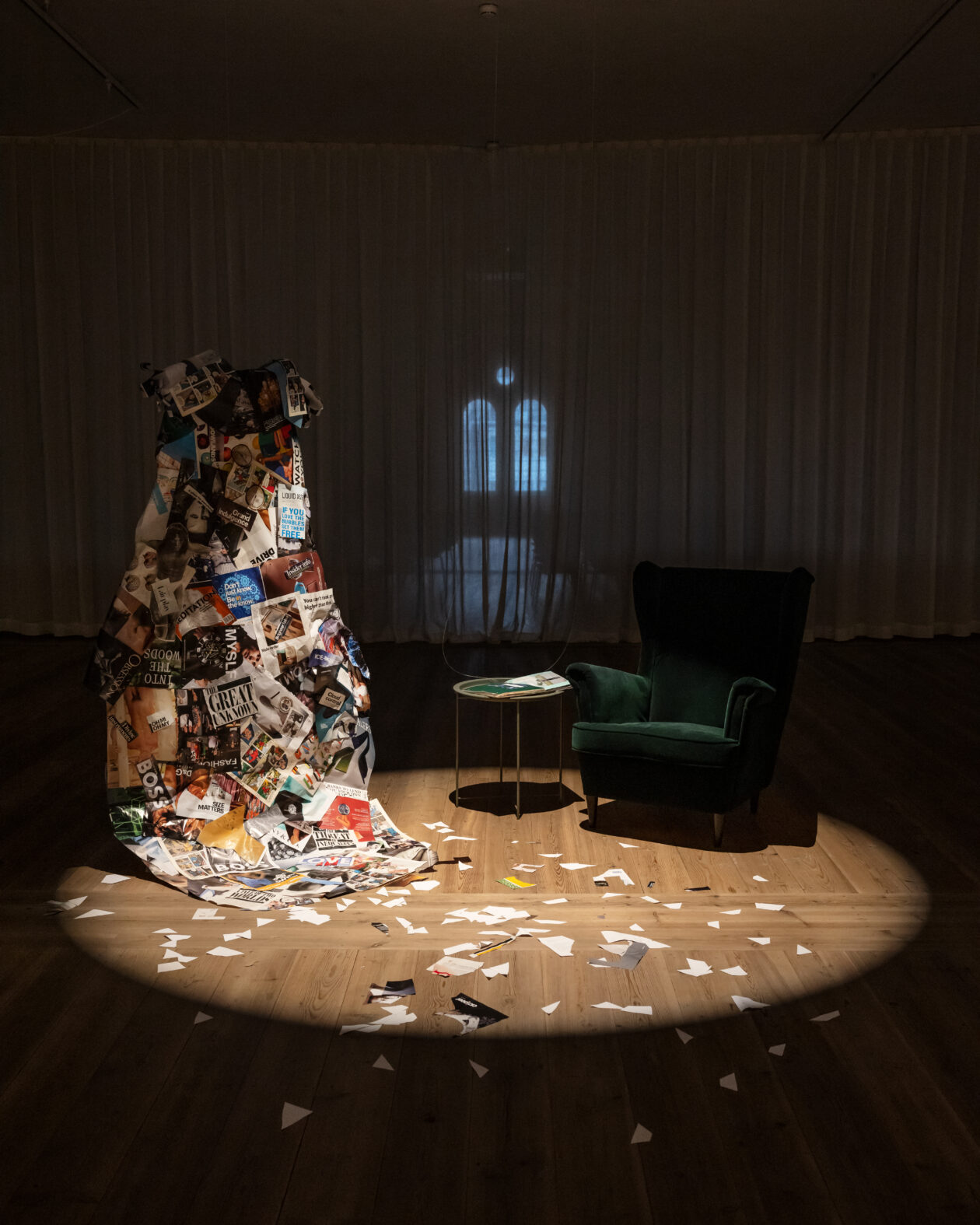
Clipping Obsession
Barbara Amalie Skovmand Thomsen
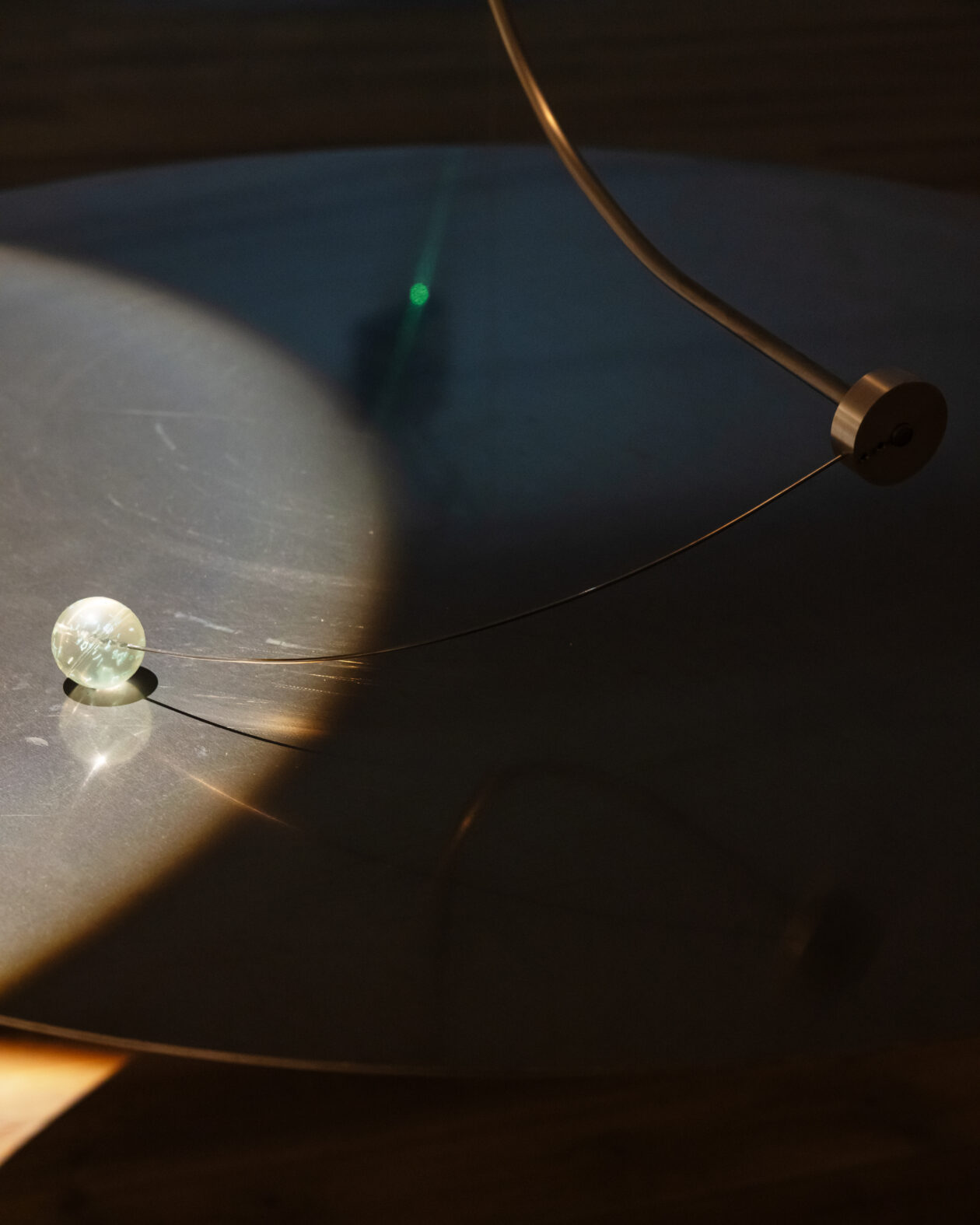
The Music of the Spheres
Engineer and artist George Koutsouris is the project’s technical consultant.
The work has been supported by the Danish Composers’ Society, the Danish Arts Foundation, Knud Højgaard’s Foundation, the Danish Visual Arts Council, Art Hub Copenhagen and the Danish Art Workshops.
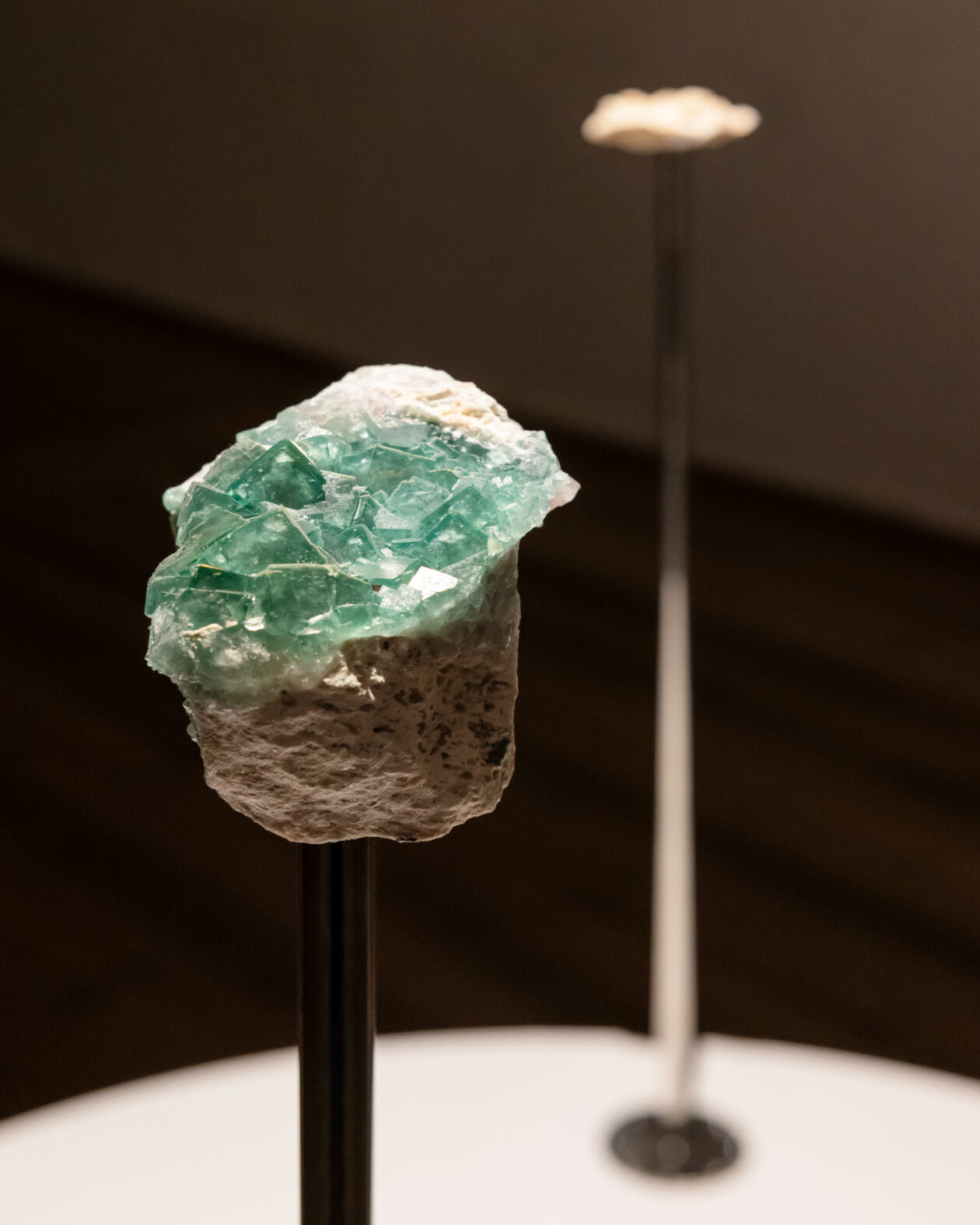
Honey Biba Beckerlee
Matters of Time
Marie Bancks
Grain
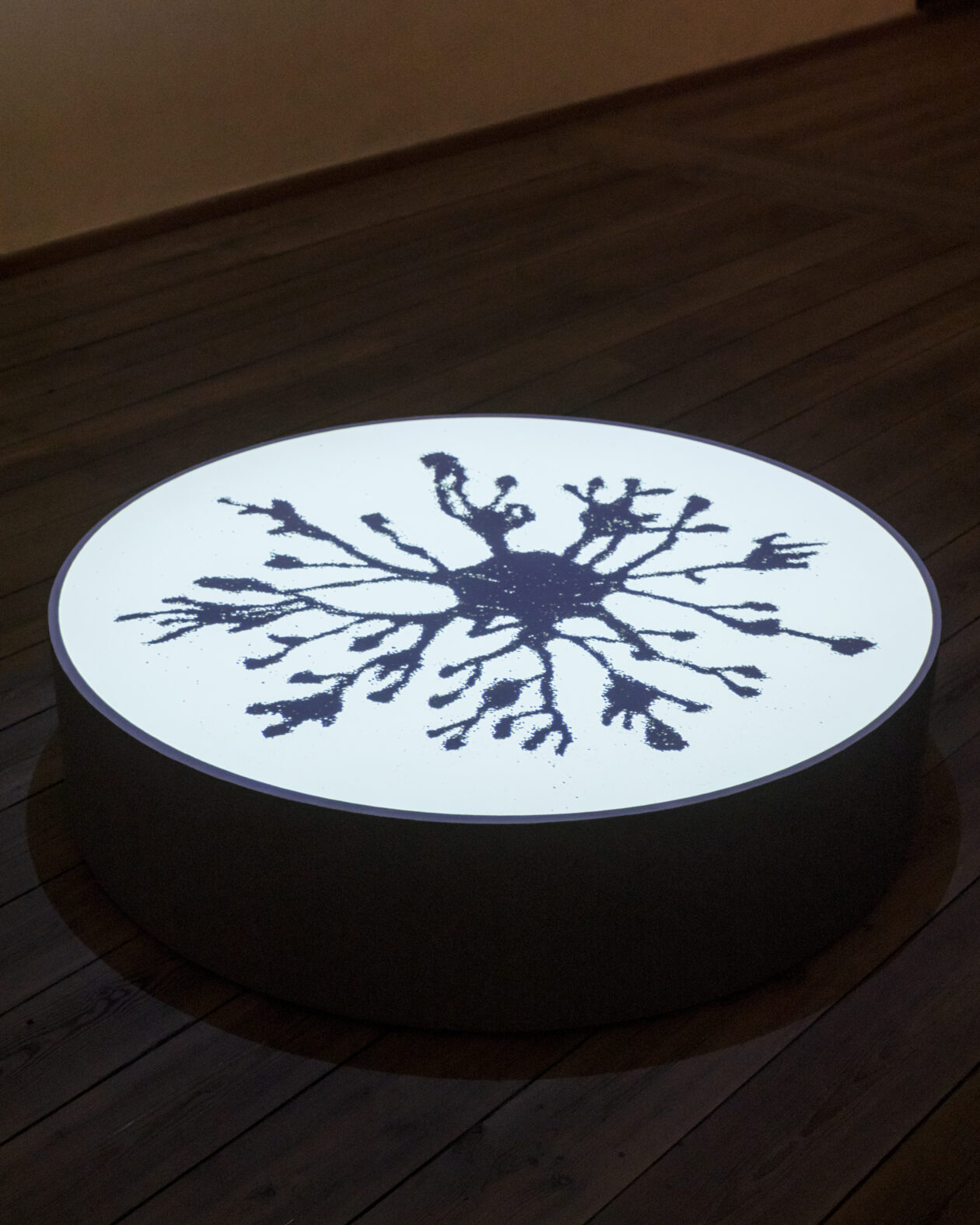
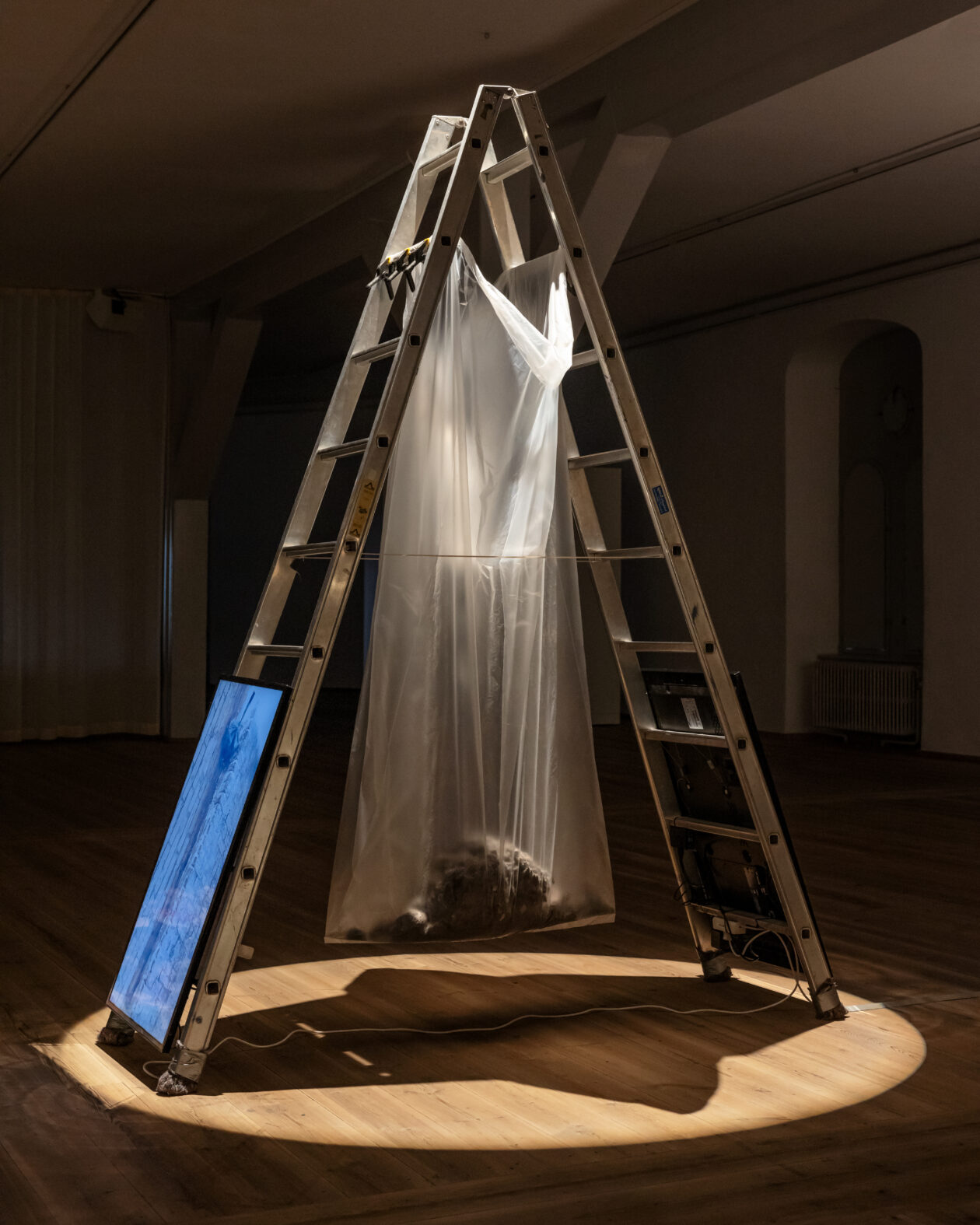
Pulsk Ravn
The Shadow Work
Stine Ljungdalh
Sofie – The Collective Navigator
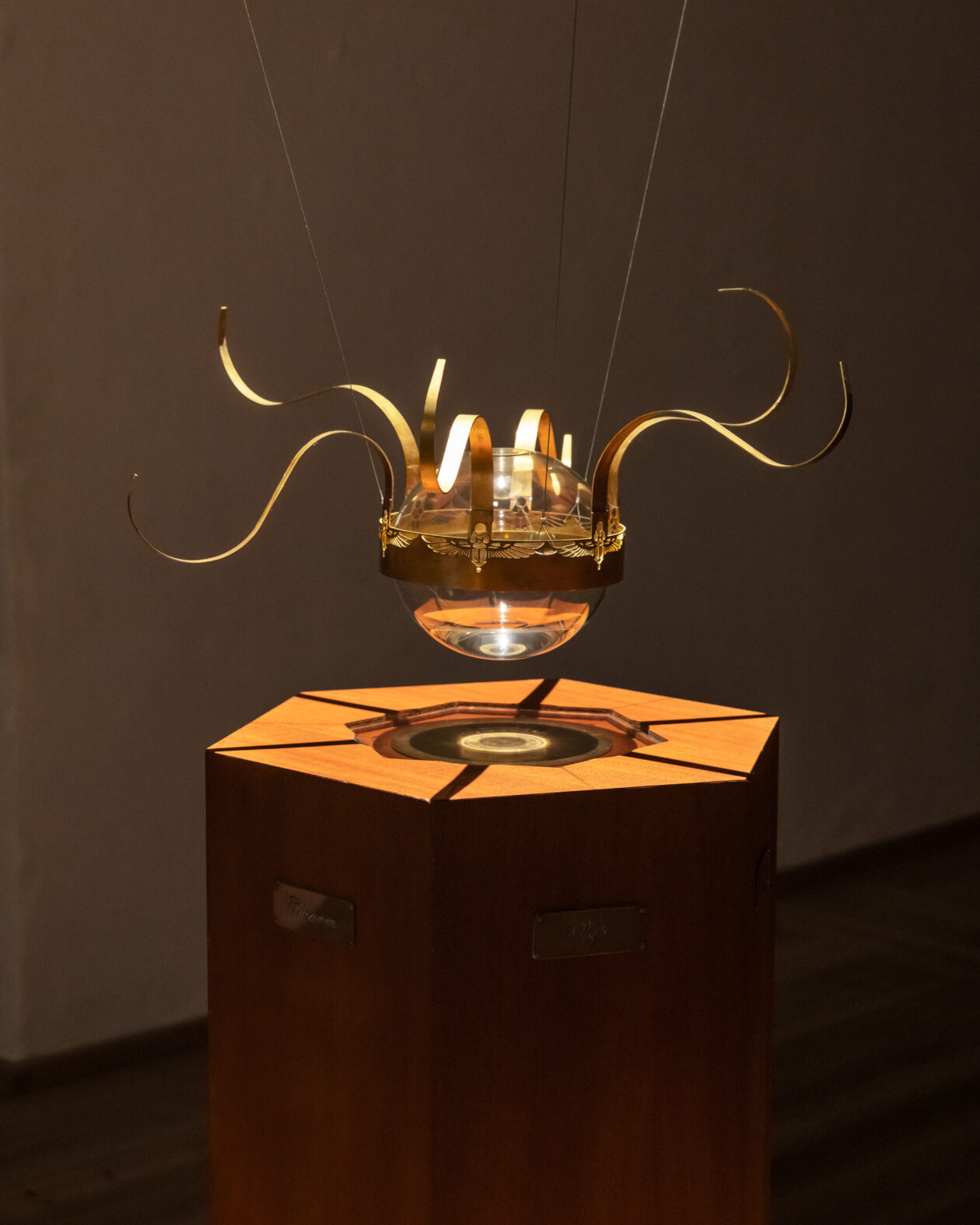
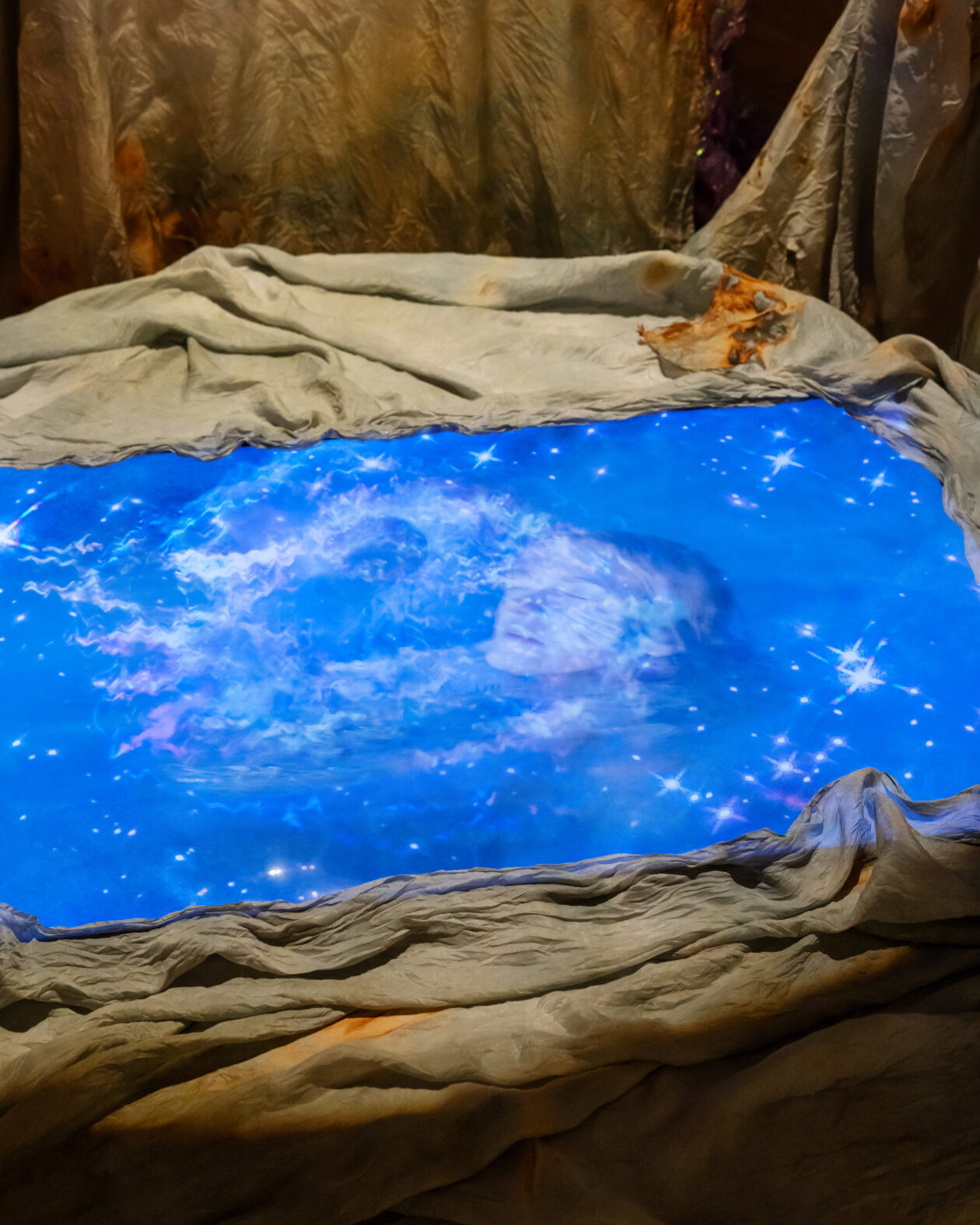
Sonja Strange
Panspermia – from Moon Europa with Love
Tomas Lagermand Lundme
Killing the darkness with words
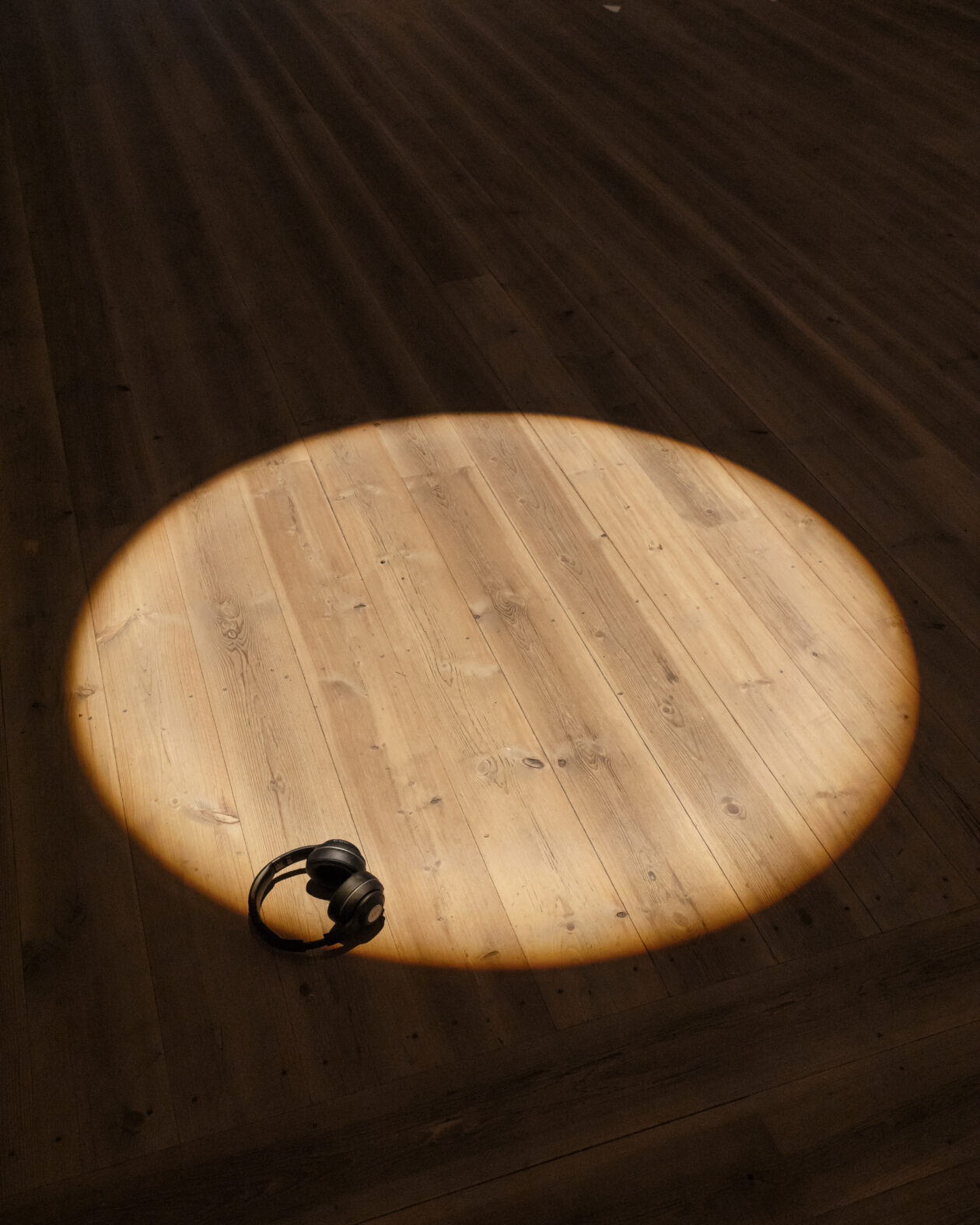
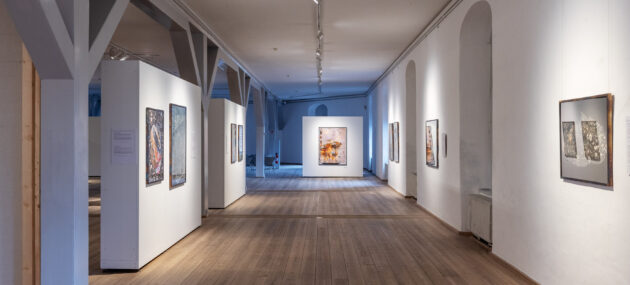
Crystalline Memories of Deep Time
What are the oldest materials we know of? With a palette of crystallized sulfur, enzymes, and meteorites, the exhibition explores the time before Earth’s formation and traces the earliest signs of life.
The journey begins before the solar system formed, when stardust from dying stars clumped together, later falling to Earth as meteorites. Crystalline Memories of Deep Time examines various meteorites and components from the primordial soup’s biochemical processes. Materials like sulfur, enzymes, and amino acids are transformed into images and presented on custom-built screens. The exhibition also delves into LUCA (Last Universal Common Ancestor)—the concept of a single-celled organism as the last common ancestor—through 3-billion-year-old fossilized structures that testify to the earliest stages of life and the interconnectedness of all living things through deep time.
Claus Spangsberg creates captivating works at the intersection of art and science. In recent years, he has specialized in microscopy and crystallization, producing images with chemical substances, DNA, and amino acids.
The exhibition is supported by
Grosserer L.F. Foghts Fond
Den Hielmstierne-Rosencroneske Stiftelse
Knud Højgaards Fond
Poul Johansen Fonden
Lizzi og Mogens Staal Fonden
OVODAN BIOTECH
Københavns Kommune – Rådet for Visuel Kunst


TIME*SOIL*STAR
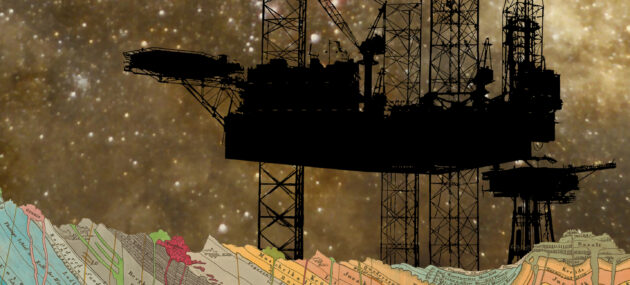
Eight contemporary artists explore the climate crisis through everything from objects found in areas of Copenhagen, subterranean creatures and floral metaphors to a café in outer space, invasions from distant galaxies.
We belong to the world. The world does not belong to us. This is the starting point for the exhibition TIME*SOIL*STAR, which revolves around humanity’s impact on the planet.
The exhibition stems from what is currently shaking the ground beneath our feet – the global climate crisis and the future we are facing. The artists aim to contribute to a new perception of the world, based on an equality between and respect for all living things on the planet.
The relationship between humans and the planet is the common thread in TIME*SOIL*STAR, but the works range widely – from paintings and sculptures to installations and video, from dystopian sci-fi to botany and contemporary archaeology.
You enter the exhibition by quite literally stepping on delicate drawings of endangered insects. Later, you encounter earth beings from the underground and experience how the past shapes the near future through objects found at Amager Fælled in Copenhagen. You can explore the colonial history of botany and study the metaphors of flowers. From the familiar, the exhibition expands into wild narratives, including an invasion from distant galaxies and future memories from a café in outer space.
The exhibition takes you on a dizzying journey through both biological and historical time, connecting to the Round Tower’s long history as an astronomical observatory and a window to the mysteries of the universe.
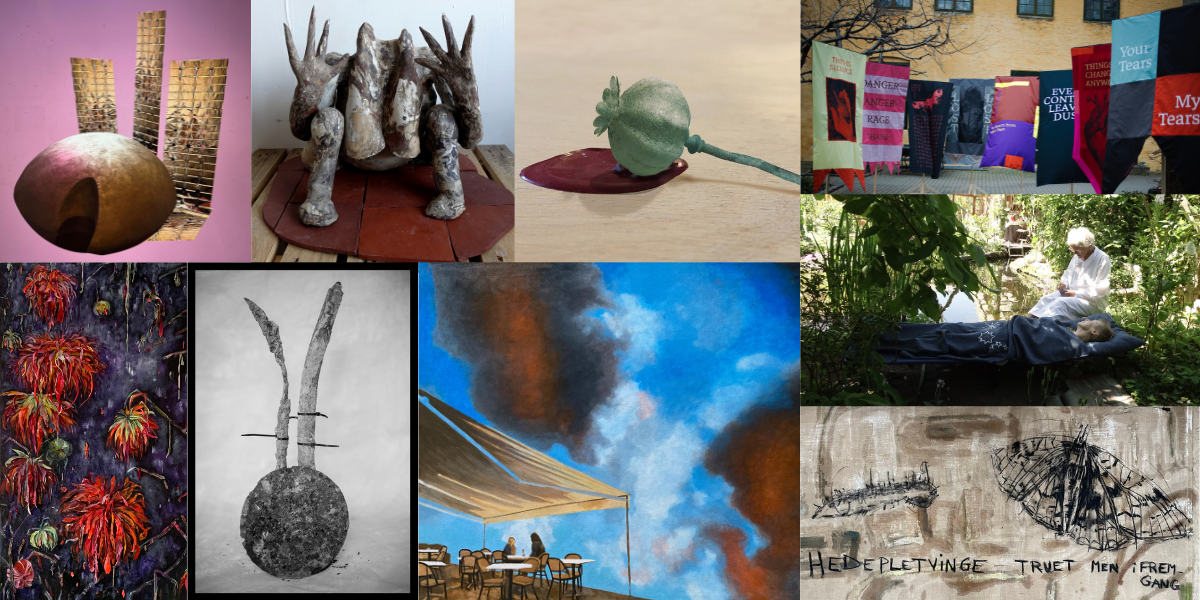
Participating artists: Jeanette Land Schou, Nina Maria Kleivan, Karen Gabel Madsen, Bodil Brems, Henriette C. Hansen, Vicky Steptoe, Pernelle Maegaard og Nanna Gro Henningsen.
The exhibition is supported by
Statens Kunstfond
Rådet for Visuel Kunst, Københavns Kommune
Knud Højgaards Fond