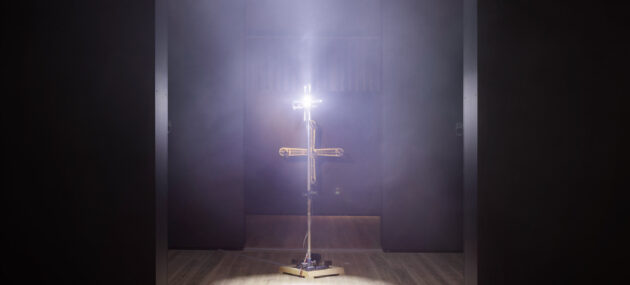
Experience the Artwork Light Cone Come to Life
Experience Light Cone from the current special exhibition as it comes to life in a poetic three-act performance by researchers and artists Jo Verwohlt and Pieter Steyaert. The performance will be followed by a 30-minute talk between the artist-researcher duo and astrophysicist Anja C. Andersen.
Light Cone is part of the exhibition Light Echoes, which explores the relationship between our perception of light and our understanding of time. The evening’s performance is based on Jo Verwohlt and Pieter Steyaert’s volumetric light sculpture and sound composition.
The two artists are also researchers and have worked together at the Niels Bohr Institute for several years, developing a shared practice at the intersection of art and science. Light Cone is their first major collaborative work.
The performance is a poetic tale in three acts exploring some of the great forces and phenomena of the universe – moving from darkness and gravity through time and causality before finally stepping into the light. Both music and visuals are created live: guitar and cello interact with data-generated imagery that changes in response to the music.
At one point, the universe itself joins the performance. Cosmic muons – tiny particles constantly passing through us and the world around us – are detected by a particle detector and help set the tempo of the music. Muons are created high in the atmosphere when cosmic rays collide with particles in Earth’s atmosphere. They exist for only a very short time and would ordinarily decay long before reaching the ground. But because they travel at speeds close to the speed of light, Einstein’s theory of relativity comes into play: from our perspective on Earth, their lifetime is extended, allowing them to reach us – and, on this evening, to become part of the performance.
Performance followed by a talk with astrophysicist Anja C. Andersen
After the performance, the artist-researcher duo will join astrophysicist Anja C. Andersen for a conversation about light and darkness as ways of experiencing and understanding the universe – in both art and science.
The event is included with standard admission, but tickets must be booked in advance via the link. Your ticket also includes admission to the current exhibition Light Echoes and the Round Tower’s own introductory exhibition Ole Rømer and the Great Discovery, which sets the scene for LIGHT YEAR 2026, marking the 350th anniversary of Ole Rømer’s discovery that light has a finite speed.
You can, of course, also make your way up the iconic Spiral Ramp to the top of the tower and watch the sun set over Copenhagen.
Practical information
Doors open 30 minutes before the event begins, giving you plenty of time to explore the historic tower and the two exhibitions, Light Echoes and Ole Rømer and the Great Discovery, either before or after the event.
4.30 pm: Doors open – explore the Round Tower and the exhibitions
5 pm: Performance begins
5.30 pm: Talk with Jo Verwohlt, Pieter Steyaert and astrophysicist Anja C. Andersen
6–7 pm: Drinks and conversation, with the opportunity to explore the Round Tower
Please note: The event will be in English.
Science & Wine: Conversations on Light, Time and the Universe
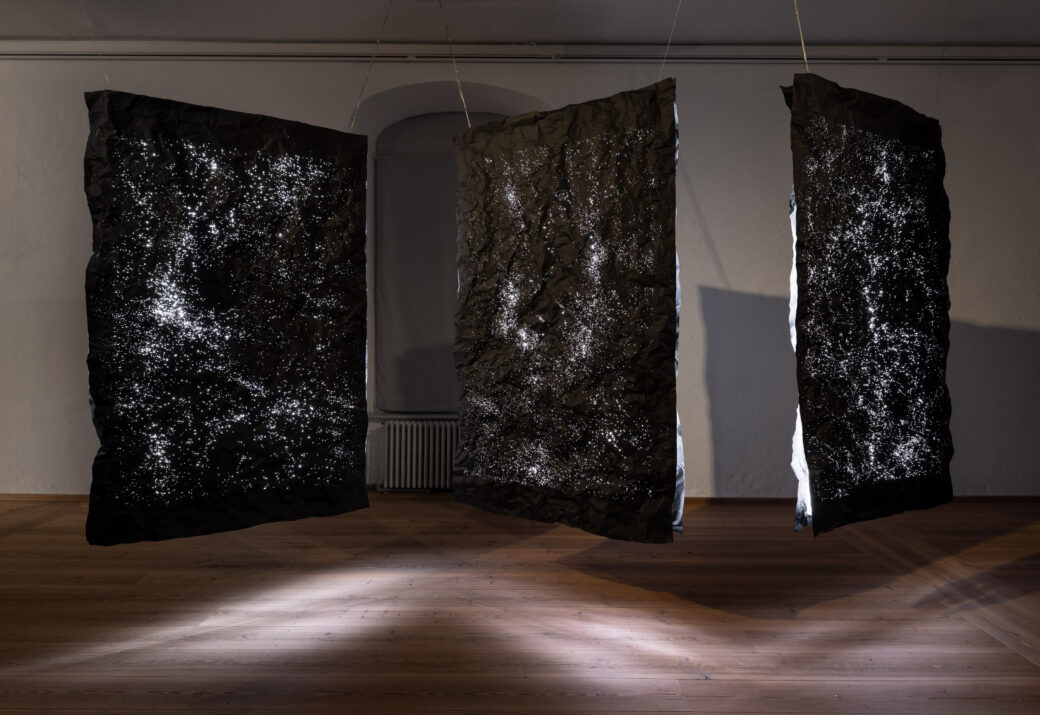
Round off the week with a drink while learning something new. Meet the curator and artists behind the current exhibition “Light Echoes” as they join scientists in exploring how light shapes our understanding of time as a dimension. Afterwards, head to the top of the Round Tower and enjoy the low evening sun over the city.
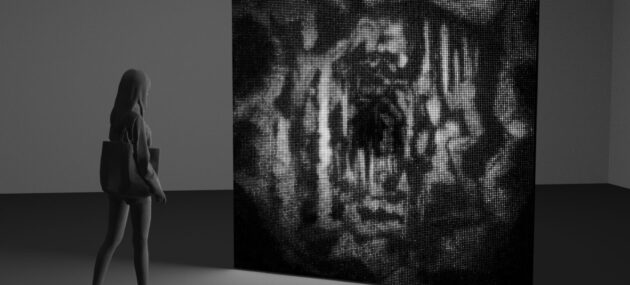
The exhibition “Light Echoes”, which explores complex astrophysical phenomena through four art installations, opens on Friday 2 October in the Round Tower’s beautiful Library Hall. That same afternoon, we have invited the artists and researchers behind the exhibition to discuss one of its central ideas: how the relationship between light and time shapes our understanding of cosmic phenomena.
We use light and time not only to understand the Universe; they are also tools for observing and investigating the world around us. This is precisely why light and time can create connections between art and science. In astrophysics, light allows us to observe events across vast distances and look far back into the past. In art, light can become material, experience and trace – and a way of exploring how we perceive and experience the world. In different ways, both art and science use light to connect what we can see with what lies beyond our direct reach.
Where Art Meets Science
This Friday afternoon, round off the working week in the best possible way – with a glass of sparkling wine (or something else) in hand while listening to a panel explore how different artistic and scientific approaches to light and time can open up new perspectives and ways of thinking across disciplines.
The exhibition is curated by Irene Campolmi, curator and co-founder of Yonder | Art•Science | Niels Bohr Institute, and presents works by Jo Verwohlt and Pieter Maria Steyaert, Lea Porsager, Ligia Bouton and artist duo Semiconductor. All the artists took part in Yonder | Art•Science’s residency programme in 2025–2026. Yonder | Art•Science is a platform for collaboration between art and science at the Niels Bohr Institute.
Programme
4.30 pm
Welcome drink
4.45 pm
Introduction by Ditte Marie Lund, Head of Programme and Exhibitions at the Round Tower, and exhibition curator Irene Campolmi
5–6 pm
Panel discussion with artists and researchers from DARK at the Niels Bohr Institute who contributed to the exhibition, moderated by Irene Campolmi:
- Artist Lea Porsager in conversation with Jens Hjorth, Professor of Astrophysics and Co-founder of Yonder | Art•Science | Niels Bohr Institute
- Artist duo Semiconductor in conversation with Steen Harle Hansen, Professor of Astrophysics at the Niels Bohr Institute, and William Baker, Postdoctoral Researcher in Astrophysics
- Artists and scientists Jo Verwohlt and Pieter Maria Steyaert
- Artist Ligia Bouton in conversation with Judit Prat and Clara Ferreira Cores, interdisciplinary researchers and astrophysicists from Yonder | Art•Science | Niels Bohr Institute
Semiconductor will also present excerpts from their installation “Light in Flight”.
Please note: The panel discussion will be in English.
6–6.30 pm
Drinks and conversation, with the opportunity to visit the top of the tower
Good to know
Before and after the programme, guests can explore the Round Tower’s year-long exhibition on Ole Rømer, which introduces LIGHT YEAR 2026 – marking the 350th anniversary of Rømer’s discovery that light has a finite speed – as well as the newly opened special exhibition “Light Echoes”.
Guests can also make their way to the top of the tower and enjoy the 360-degree views of Copenhagen from the viewing platform.
The Round Tower offers a complimentary glass of wine on arrival. Additional drinks will be available to purchase during the event.
Black Holes: When Light Falls In
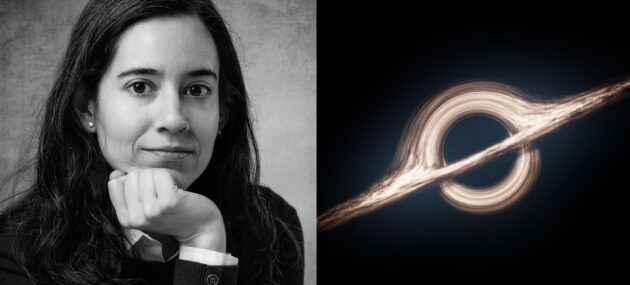
Join physicist Lorena Magaña Zertuche on a journey into the fascinating world of black holes and discover how scientists use gravitational waves, light, and gravity itself to explore the most extreme phenomena in the universe. This talk will be in English.
For centuries, astronomy has been the study of light. Almost everything we know about the universe has come from capturing the faint glow of distant stars and galaxies. But now black holes have given us a new window into the Cosmos. Black holes are so massive that they trap even light itself but despite this black holes are becoming some of our most powerful tools for probing the universe.
When two black holes collide, they cretae ripples in the fabric of space and time known as gravitational waves which carry a record of some of the most violent events in the universe. Thanks to observatories like LIGO, scientists have learned how to “listen” to these waves for the first time, opening a completely new chapter in astronomy. In the future, the space-based observatory LISA will take us even further, allowing us to explore giant black hole mergers across the universe.
In this talk, physicist Lorena Magaña Zertuche will take you on a journey into the strange and fascinating world of black holes where gravity itself becomes a messenger. She will reveal how scientists use black holes to test Einstein’s theory of gravity, search for signs of new physics and uncover the clues to understanding how our cosmos works.
Meet Lorena Magaña Zertuche
Lorena Magaña Zertuche is a theoretical physicist at the new Center of Gravity research centre at the Niels Bohr Institute where researchers are working on some of the biggest questions in modern physics: What happens inside a black hole? How are gravity and quantum mechanics connected? And what can gravitational waves tell us about the history and evolution of the universe?
Lorena combines theoretical physics, advanced computer simulations, and artificial intelligence to understand the most extreme environments in the universe — using black holes as laboratories to explore the fundamental nature of gravity.
The event is part of Black Hole Week, organised by the Center of Gravity, a new Centre of Excellence at the Niels Bohr Institute dedicated to exploring gravity, black holes, and the most extreme phenomena in the universe.
Experience the exhibitions and the Round Tower
Before and after the evening’s talks, guests will also have the opportunity to explore the exhibitions Refractions of Ice and Ole Rømer and the Great Discovery, Rundetaarn’s introductory exhibition. Visitors are also welcome to walk up the beautiful Spiral Ramp to the top of the Tower and enjoy the panoramic views over Copenhagen. Wine and non-alcoholic refreshments will be available for purchase during the event.
The talk is part of Rundetaarn’s LIGHT YEAR 2026 programme, marking the 350th anniversary of Ole Rømer’s discovery of the speed of light.
Tower Talk: Ad Lucem
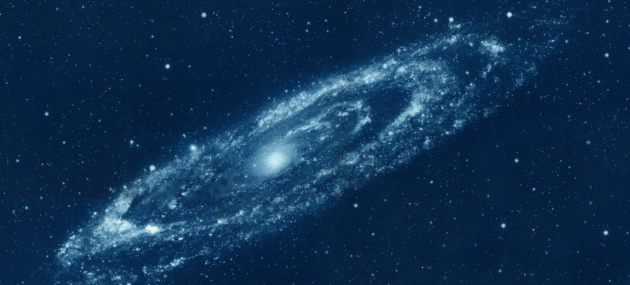
Explore the art-science photo exhibition “Ad Lucem” together with its two creators, artist Cecilia Ömalm and astronomy professor Göran Östlin.
How does light from distant galaxies connect us across time and space? Immerse yourself in mesmerizing, deep-blue works created with cyanotype – a unique process where iron salts mixed into UV-sensitive solutions, combined with sunlight, form images in those unmistakable blue tones.
Ömalm and Östlin recreate the Universe’s light and astronomical imagery using both historic glass-plate negatives and modern digital sensors. Each piece is printed by hand, and when the Sun develops these celestial images, it becomes a poetic act: the works are reborn by the very light from the sky toward which the telescopes once pointed.
“Ad Lucem” is the duo’s largest solo exhibition to date, featuring 40 works including a new piece inspired by Danish astronomer Ole Rømer’s measurements of the speed of light – presented in a spatial design reflecting the tower’s architecture and evoking the feeling of stepping into an observatory.
Cecilia Ömalm and Göran Östlin will guide visitors through the exhibition and share insights into their cyanotype practice. For those eager to experience the craft firsthand, the artists will host a cyanotype workshop on 7 February, open to both children and adults.
Before and after the tour, guests are welcome to enjoy the exhibition at their own pace and purchase refreshments from the bar in the Library Hall. Admission to the Round Tower is included in the ticket.
Please note: The talk will be held in English.
The event is part of the program for Light Year 2026 – a year-long celebration of light and the 350th anniversary of Ole Rømer’s groundbreaking discovery of the speed of light.
Walk & Talk with Elena Bollati in “Being Coral”
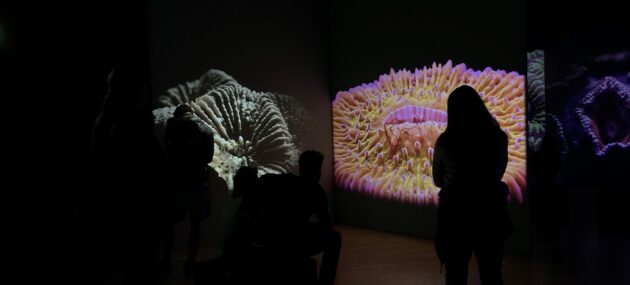
Meet one of the lead researchers working behind the exhibition as she takes guests on a walk through beautiful, sensory video portraits of the planet’s vanishing corals.
Documentary filmmaker and video artist Maja Friis is the creator of the exhibition “Being Coral” which explores the impact of climate change on the planet’s corals through research-based art.
In collaboration with a team of coral researchers from the University of Copenhagen, Friis has made macro-optic recordings of selected tropical coral species. The video portraits allow the audience to experience these tiny creatures on a large scale and in a uniquely intimate way.
During this special evening tour, Elena Bollati will share insights into the creation of the close collaboration with coral researchers from the University of Copenhagen, which made the macro recordings possible, and the scientific methods behind the exhibition.
Walk & Talk with the Artist Behind “Being Coral”
Meet video artist and documentarian Maja Friis in the exhibition as she takes guests on a walk through her beautiful, sensory video portraits of the planet’s vanishing corals.
Documentary filmmaker and video artist Maja Friis is the creator of the exhibition “Being Coral” which explores the impact of climate change on the planet’s corals through research-based art.
In collaboration with a team of coral researchers from the University of Copenhagen, Friis has made macro-optic recordings of selected tropical coral species. The video portraits allow the audience to experience these tiny creatures on a large scale and in a uniquely intimate way.
During this special evening tour, Maja Friis will share insights into the creation of the video works, her close collaboration with coral researchers from the University of Copenhagen, which made the macro recordings possible, and the artistic processes and scientific methods behind the exhibition.
Art and Science in Symbiosis
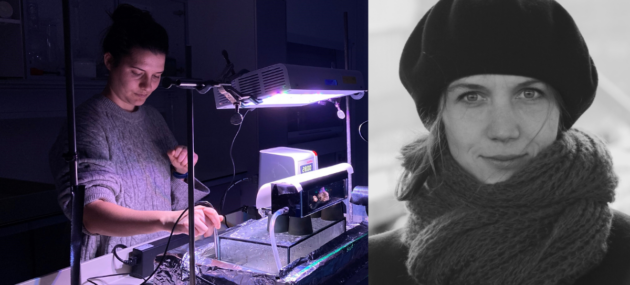
Learn more about the role of art in communicating the climate crisis as well as the research and the artistic and scientific methods behind the creation of the exhibition “Being Coral” when video artist Maja and postdoc from Marine Biology Section at University of Copenhagen, Elena Bollati, visit the tower for a talk.
The exhibition “Being Coral” is an audiovisual installation deeply rooted in scientific research on corals and their response to global warming.
The video recordings in the exhibition were created in close collaboration with coral researchers from the University of Copenhagen. Learn more about the intersection of Art and Science as well as the research and methods behind the exhibition in this talk between the artist and the lead researcher on the project. Together, they will provide insights into the interdisciplinary collaboration behind the coral footage for the exhibition, and discuss how the collaboration between Art and Science can open up new insights and understandings.
Note: The talk will be held in English.
Both video clips from the exhibition and behind-the-scenes images will be shown.
Admission to the exhibition and the Round Tower is included in the ticket price.
About the Exhibition
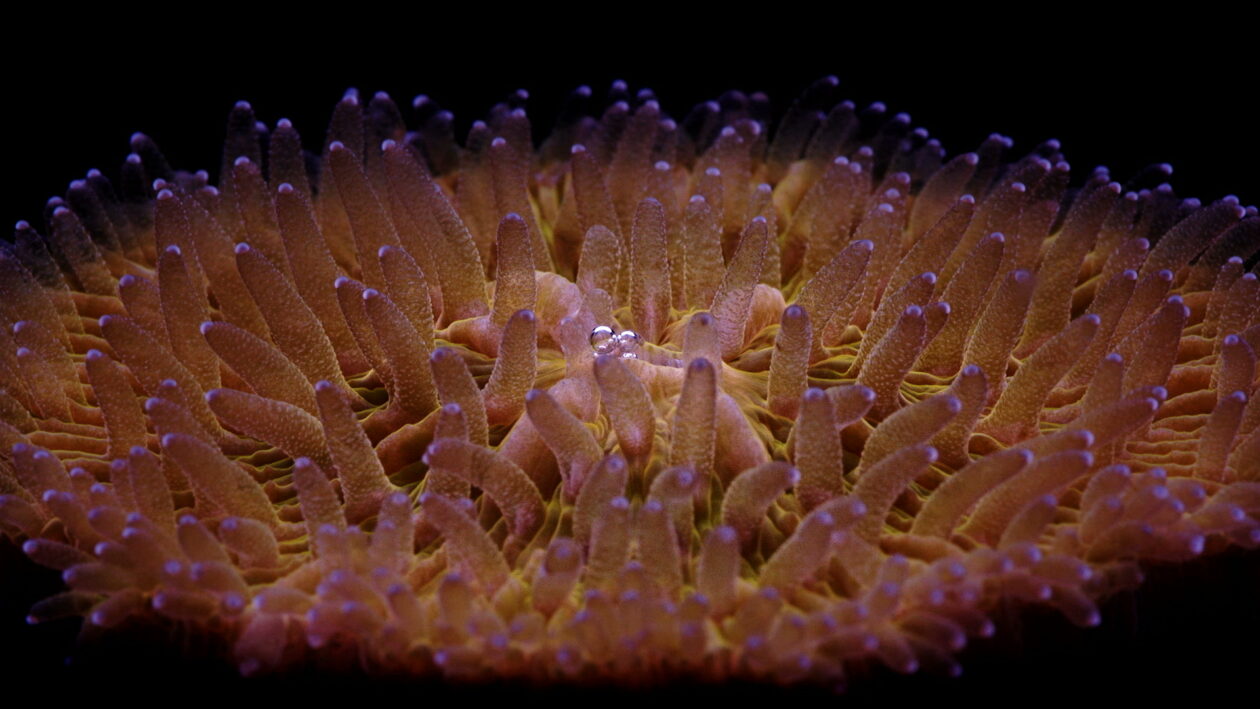
Documentary filmmaker and video artist Maja is behind the exhibition that explores the impact of climate change on the planet’s corals through research-based art.
In collaboration with a team of coral researchers from the University of Copenhagen, Friis has made macro-optic recordings of selected tropical coral species. The video portraits allow the audience to experience these tiny creatures on a large scale and in a uniquely intimate way.
“Art has the potential to communicate the state of nature with unfiltered seriousness and through a sensory language that can touch us on a deeper, existential level. By translating scientific data into aesthetic experiences, I hope to contribute to new insights that can sensitize our climate awareness and bring us closer to understanding the life forms we share the world with and the irreversible changes they are subjected to,” says Maja Friis.
The collaboration on the recordings also proved fruitful for the researchers, as the video recordings provided them with the ability to visualize coral bleaching with tools that are not typically available in their laboratory:
“In 10 years of working with corals, I have measured this phenomenon countless times, but I have always looked at it indirectly, through signals, numbers, graphs. But now, for the first time, I felt like I could truly witness coral bleaching. The method allowed me to notice movement patterns that my previous approaches had overlooked,” says Elena Bollati, postdoc at the Marine Biology Section, University of Copenhagen.
Tower Talk: Meet Artists Christoph & Sebastian Mügge
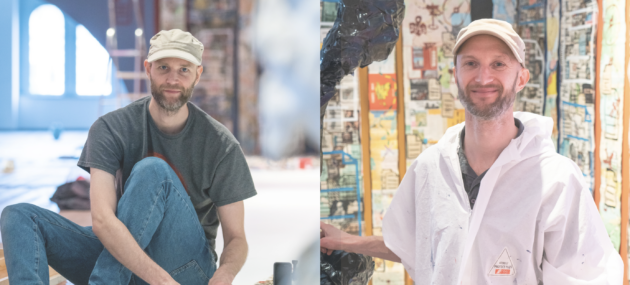
Meet the German-Swedish artist duo behind the current exhibition “Lost Library Legends” in the Library Hall.
“Lost Library Legends” blurs the lines between truth and fiction as the artists humorously tackle themes such as our physical and digital remains, death and value systems or how storytelling and factual truths can be distorted.
Join the artist talk to hear the thoughts behind the exhibition and their distinct style as Christoph and Sebastian Mügge show around the site-specific installation on the opening.
The conversation takes place in English and is moderated by the Round Tower’s Head of History and Dissemination, Rasmus Agertoft.
About the artists
The brothers Christoph (b. 1983) and Sebastian Mügge (b. 1981) were born in Germany, but currently live in Sweden.
They are both trained visual artists and have collaborated as an artist duo since 2017. They often exhibit internationally – previous exhibition spaces include galleries and other art venues in the Faroe Islands, England, Greece, Austria and the Netherlands.
As a duo, they create large-scale site-specific projects based on a combination of found materials and their own styles and techniques, e.g. painting, drawing, installation and digital works. In a humorous way, their installations take on existential themes such as life, death, what we value and our physical and digital footprint on the world, and how factual truths and storytelling can be distorted.
“Lost Library Legends” takes place in the Library Hall from 22 June to 11 August.
Read more about the exhibition here.